Loading...
Loading...
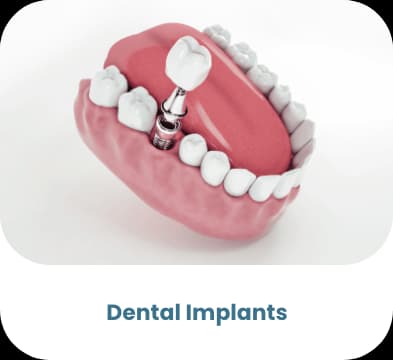
A dental implant is a small titanium post placed into the jawbone to replace the root of a missing tooth. Once the bone fuses to the implant, it supports a natural-looking crown, bridge or denture. Implants restore chewing, speech and appearance, and — unlike removable dentures — are a fixed, long-lasting solution with success rates of around 95–98%.
A dental implant is a small titanium post placed into the jawbone to replace the root of a missing tooth. Once the bone fuses to the implant, it supports a natural-looking crown, bridge or denture. Implants restore chewing, speech and appearance, and — unlike removable dentures — are a fixed, long-lasting solution with success rates of around 95–98%.
The most common questions about this treatment
With good oral hygiene and regular check-ups, the implant post can last for decades and often a lifetime, because titanium fuses permanently with the bone. The crown attached to it may need replacement after many years of normal wear, similar to other dental restorations.
Implant placement is done under local anaesthesia, so you should not feel pain during the procedure. Afterwards, most patients describe mild soreness or swelling for a few days, similar to a tooth extraction, which is well managed with simple pain relief.
Many patients make two trips: one to place the implants and one for the final crown after healing (3–6 months later). In selected cases with immediate-loading implants, treatment can be completed in fewer visits. Your dentist confirms the plan after the 3D scan.
If the jawbone is too thin or short, a bone graft or sinus lift can rebuild it before or during implant placement. This adds healing time but allows many patients who were previously told they could not have implants to proceed safely.
Implants are fixed, preserve the jawbone and do not rely on grinding down neighbouring teeth as a bridge does. They feel and function like natural teeth and avoid the movement of removable dentures. Your dentist will advise the best option for your case.
Explore other bariatric surgery options
A dental implant is an artificial tooth root, usually made of biocompatible titanium, that is placed into the jaw. Over a few months it bonds with the bone in a process called osseointegration, creating a stable foundation. A connector (abutment) and a custom crown are then attached to complete the new tooth.
Implant treatment is usually completed in clear stages:
Consultation & 3D imaging — a CBCT scan and oral exam assess bone volume and plan the exact implant position.
Implant placement — the titanium post is placed into the jawbone under local anaesthesia, typically in 30–60 minutes per implant.
Osseointegration — over 3–6 months the bone fuses to the implant; a temporary tooth can be provided in the meantime.
Abutment & crown — once healed, the abutment is fitted and a custom crown is placed to match your natural teeth.
If there is not enough bone, a bone graft or sinus lift may be done first, which adds healing time before the implant.
Single tooth implant — one implant and crown to replace one missing tooth.
Implant-supported bridge — a few implants support a bridge across several missing teeth.
All-on-4 / All-on-6 — a full arch of fixed teeth supported by four or six implants.
Zygomatic implants — longer implants for patients with severe upper-jaw bone loss who cannot have standard implants.
You may be a suitable candidate for dental implants if you:
Have one or more missing teeth
Have enough jawbone density, or are willing to have a bone graft if needed
Have healthy gums and good general oral hygiene
Are a non-smoker, or can stop smoking during healing
Have realistic expectations and are committed to follow-up care
A consultation with 3D imaging confirms whether implants are right for you.
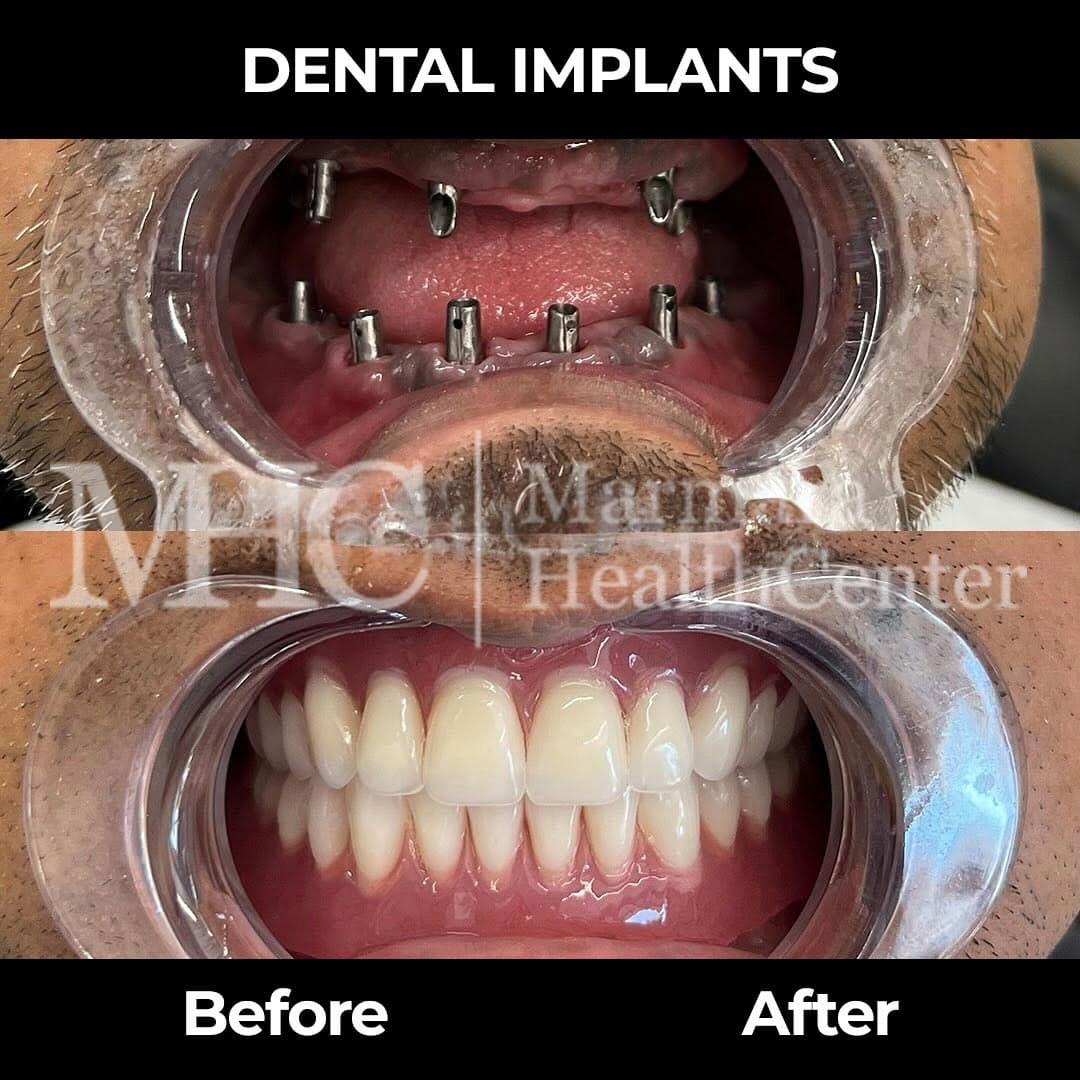
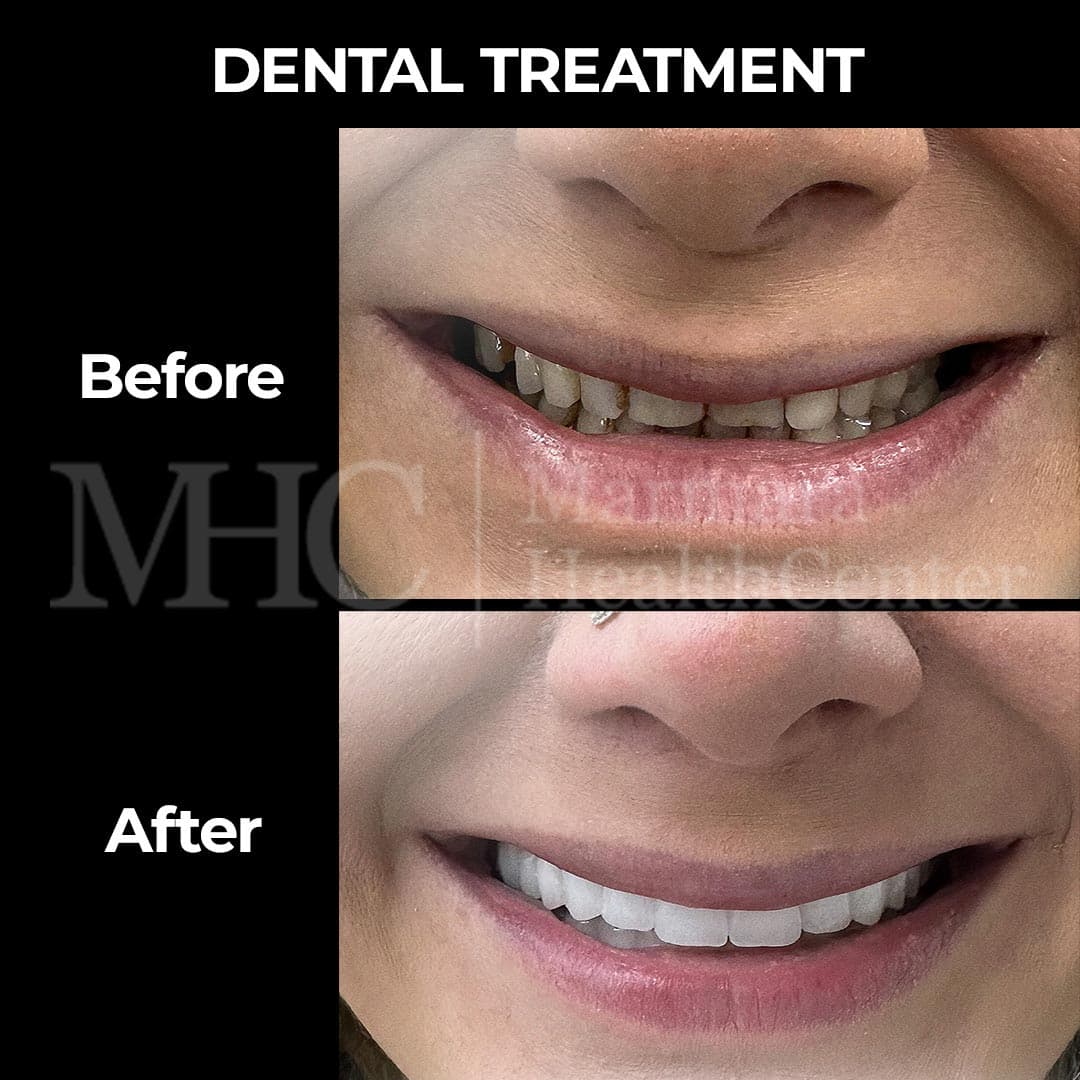
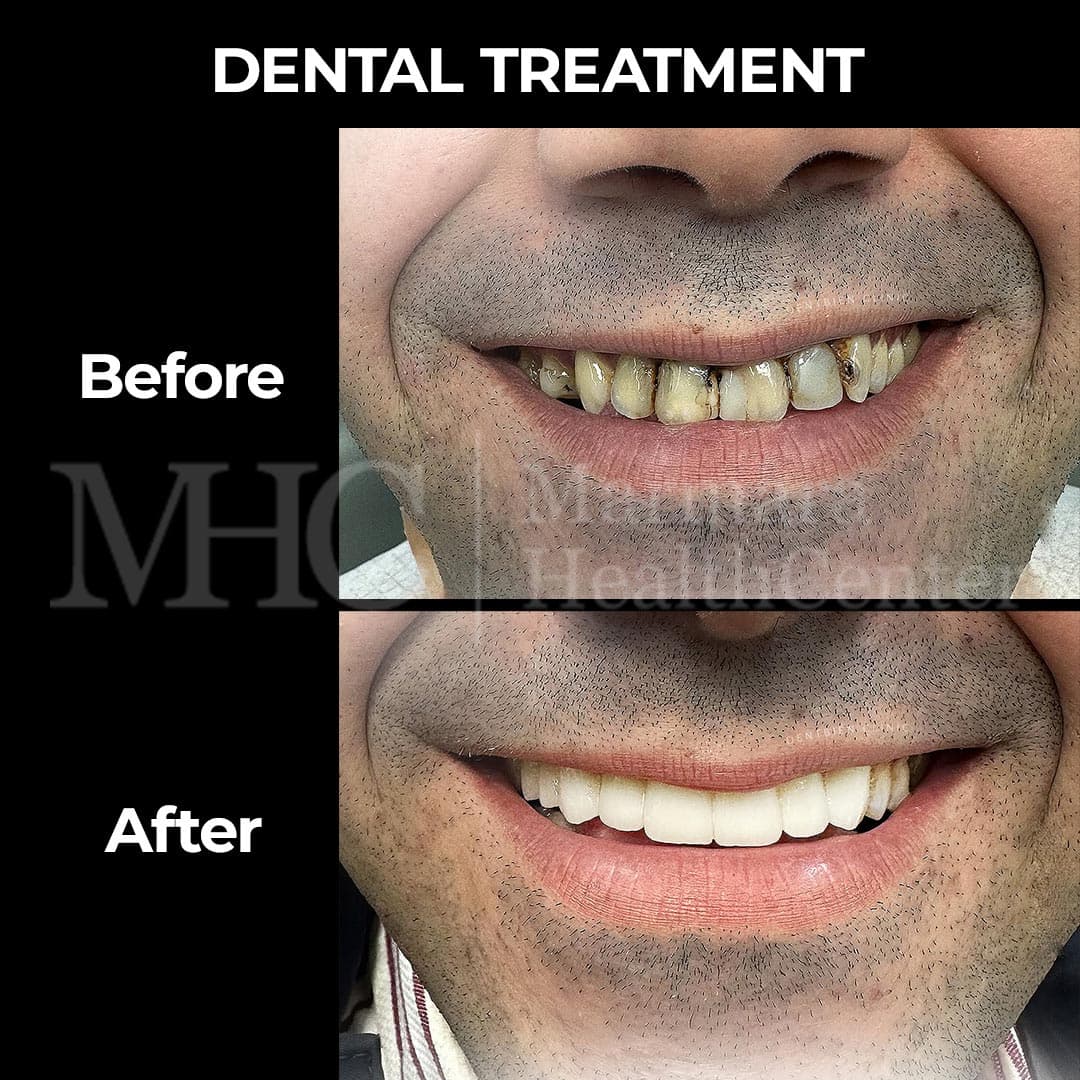
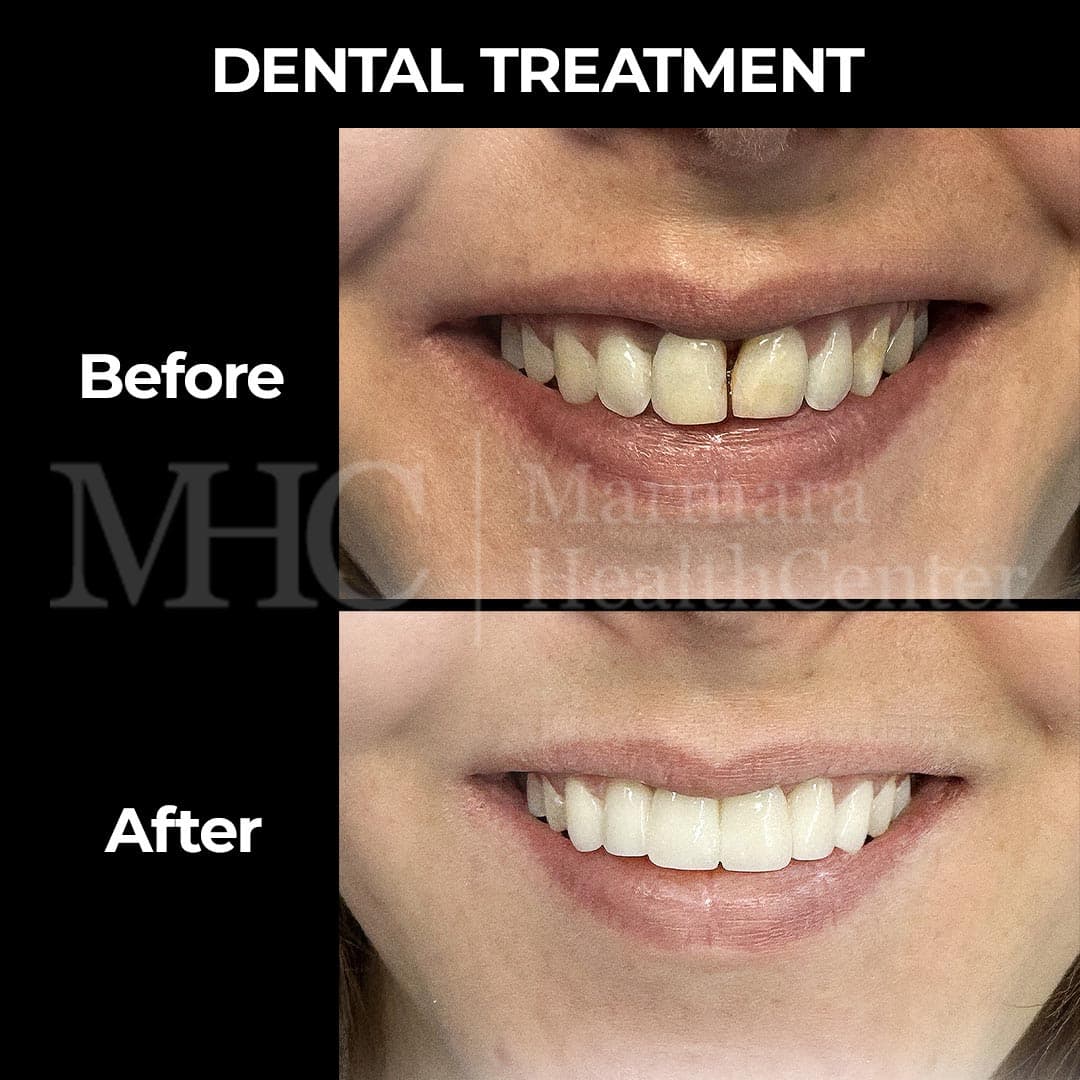
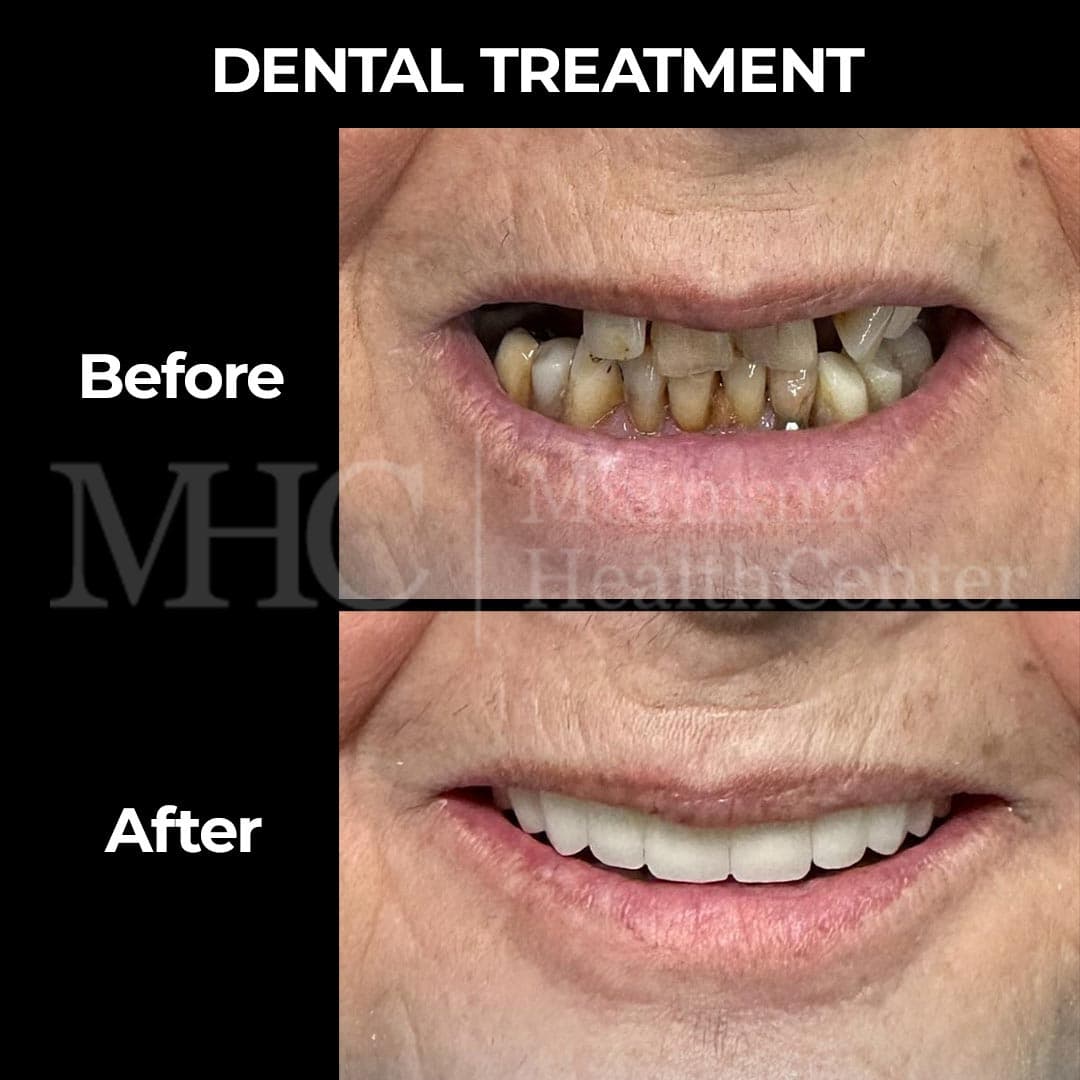
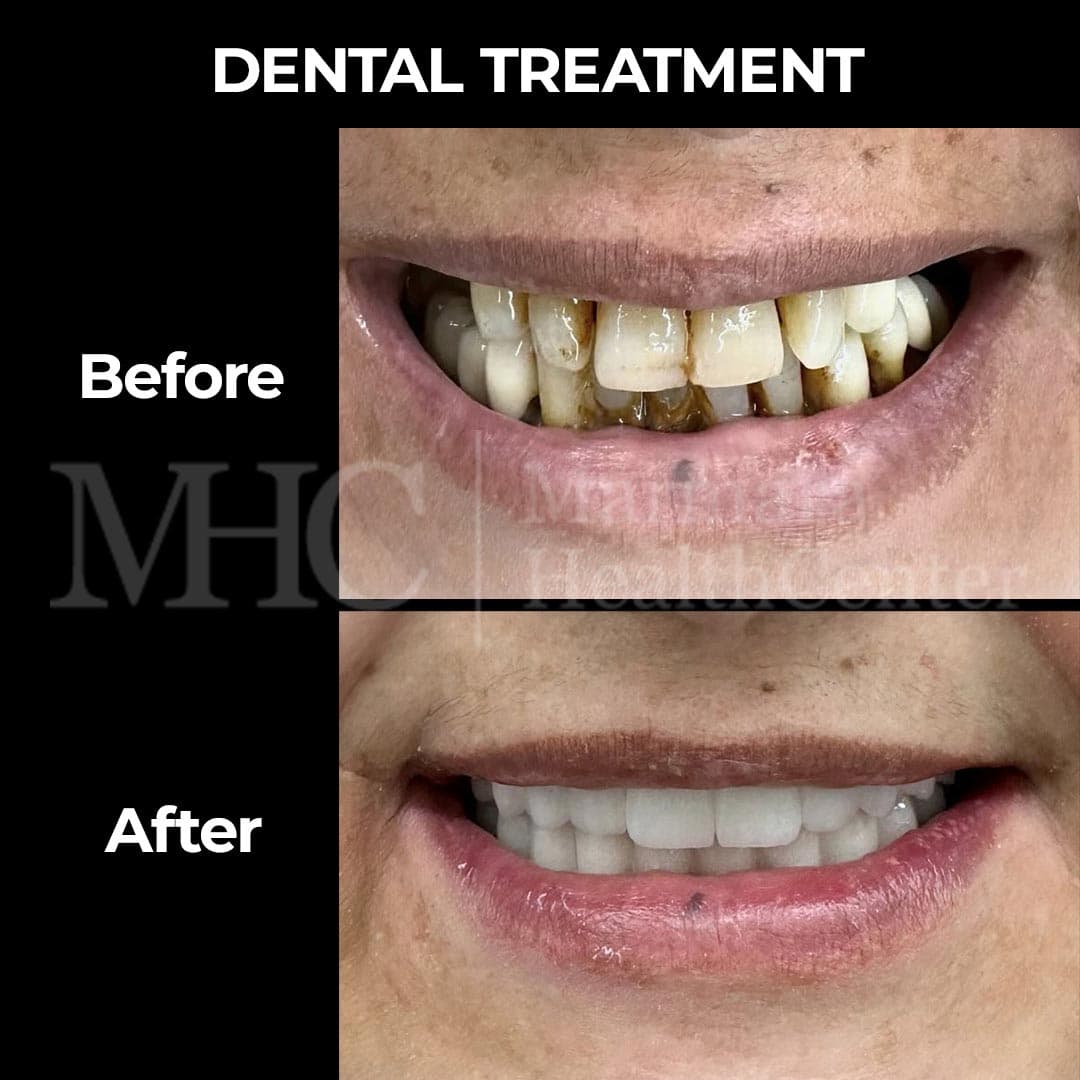
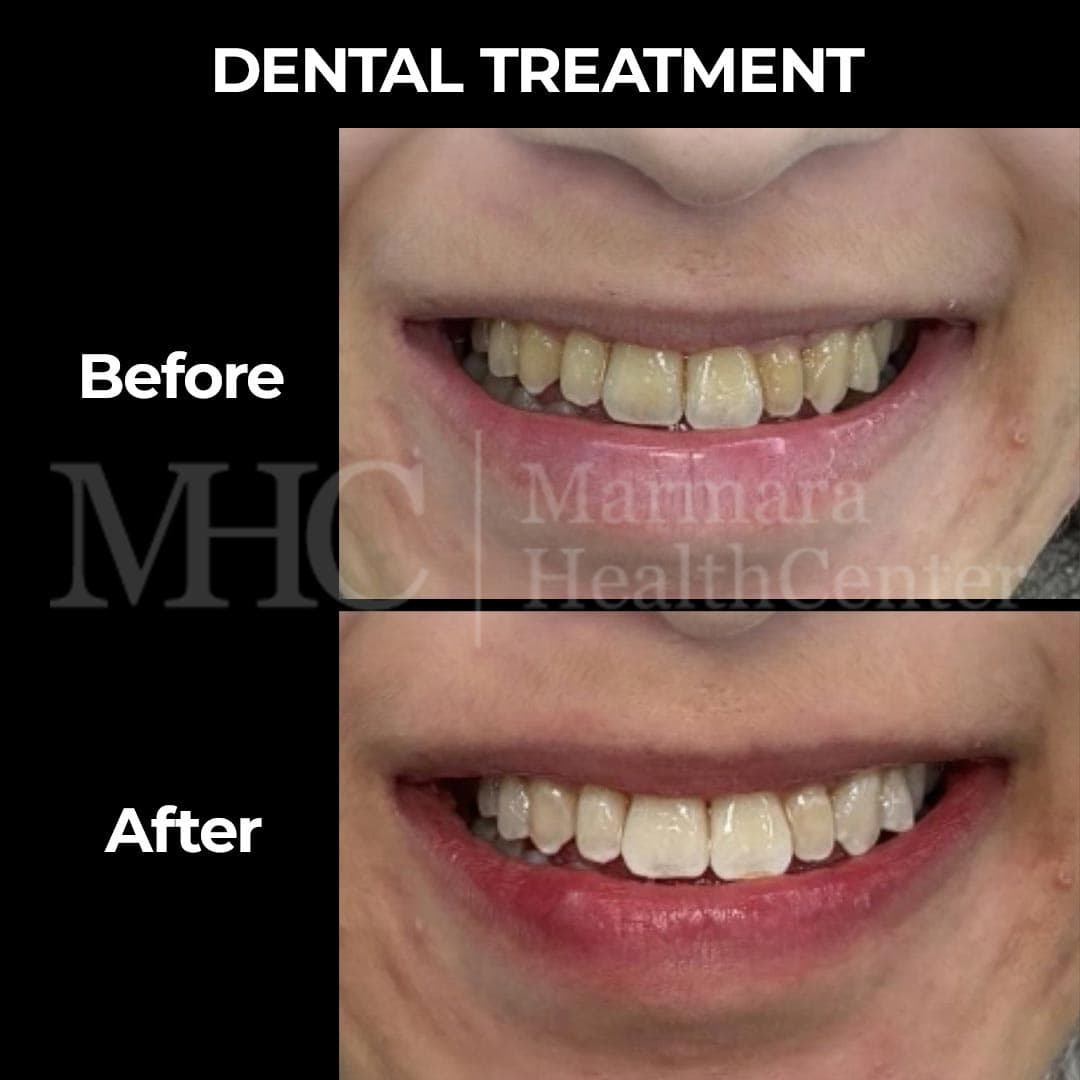
Real patient outcomes from Marmara Health Center
Mild swelling and tenderness; soft diet; usual activity resumes quickly
Stitches settle (if used); gentle oral hygiene as instructed
Comfortable healing of the gum
Osseointegration completes (longer if a graft was needed)
Abutment and permanent crown placed
Most people feel well within a few days of placement; the longer wait is the bone bonding to the implant before the final crown.
Dental implants are a well-established, predictable treatment, but as with any minor surgery there are risks. These can include infection at the implant site, swelling and bruising, temporary numbness, sinus issues for upper implants, or — rarely — implant failure if the bone does not fully integrate. Good candidate selection, accurate 3D planning and excellent aftercare keep success rates high. Smoking and uncontrolled diabetes can reduce healing.
Ministry-authorised health tourism — an Istanbul clinic operating under the Republic of Türkiye Ministry of Health Health Tourism Authorization Certificate and a member of the Health Türkiye programme.
Modern dental technology — 3D CBCT imaging and digital planning for precise placement.
Quality materials — globally recognised implant systems with porcelain or zirconia crowns.
All-inclusive care — free online consultation (send a panoramic X-ray for a preliminary plan), VIP airport transfers, hotel accommodation, interpreter support and follow-up.
For detailed information about our aesthetic, hair, dental and bariatric treatments, please use the contact channels below. Initial consultations for international patients can be arranged remotely via video call or WhatsApp.