Loading...
Loading...
Root canal treatment (endodontics) saves a tooth whose inner pulp has become infected or inflamed. The infected tissue is removed, the canals are cleaned, shaped and sealed, and the tooth is restored — relieving pain and letting you keep your natural tooth instead of extracting it.
Root canal treatment (endodontics) saves a tooth whose inner pulp has become infected or inflamed. The infected tissue is removed, the canals are cleaned, shaped and sealed, and the tooth is restored — relieving pain and letting you keep your natural tooth instead of extracting it.
The most common questions about this treatment
The tooth is numbed with local anaesthesia, so the treatment itself should not hurt — in fact it relieves the pain of an infected tooth. Mild tenderness for a few days afterwards is normal and eases with simple pain relief.
Removing the pulp can leave the tooth more brittle, especially back teeth that take heavy chewing forces. A crown protects and strengthens it, greatly improving how long the treated tooth lasts.
Keeping your natural tooth with a root canal is usually preferable when the tooth can be saved, as it preserves function and bone. Extraction is considered when a tooth is too damaged, and is then replaced with an implant or bridge.
With a protective crown and good oral hygiene, a treated tooth can last many years, often a lifetime. Regular check-ups help catch any issues early.
A root canal itself takes about 1–2 visits over a few days. If a crown is added to protect the tooth, allow a little longer for it to be crafted and fitted.
Explore other bariatric surgery options
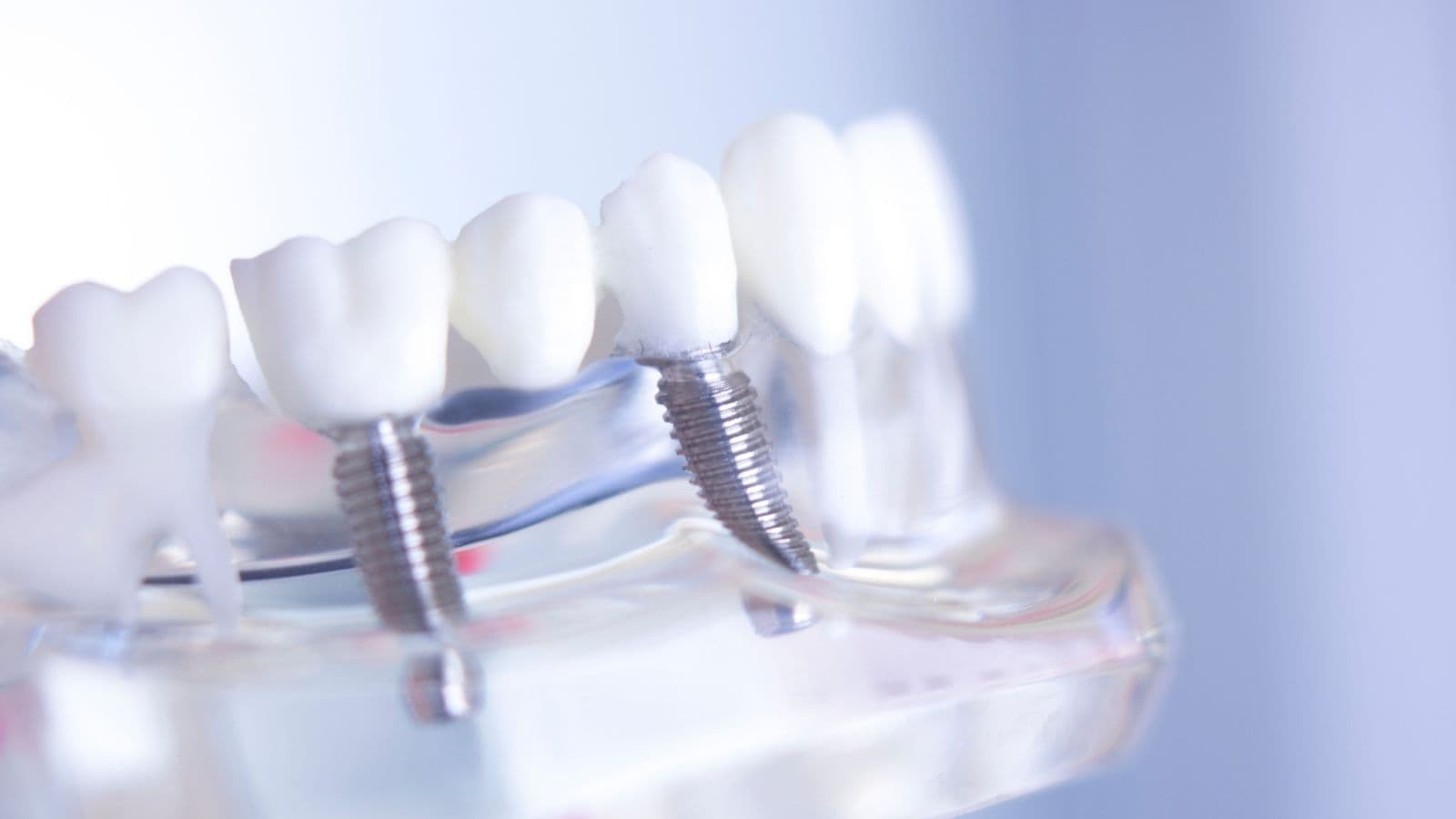
Inside each tooth is soft pulp containing nerves and blood vessels. When deep decay, a crack or injury lets bacteria reach it, the pulp becomes infected and painful. A root canal removes this pulp, disinfects and fills the canals, and seals the tooth. A crown is usually placed afterwards to protect and strengthen it.
A root canal is performed under local anaesthesia:
Diagnosis — an examination and X-ray confirm the infection and plan the treatment.
Access & removal — the tooth is numbed and the infected pulp is removed through a small opening.
Cleaning & sealing — the canals are cleaned, shaped, disinfected and filled to seal the tooth.
Restoration — the tooth is rebuilt, and a crown is usually placed to protect it.
You may be a suitable candidate if you:
Have a deeply decayed, infected or abscessed tooth
Have severe toothache, prolonged sensitivity or a dental abscess
Have a cracked or injured tooth exposing the pulp
Want to keep your natural tooth rather than extract it
Are in good general health for routine dental treatment
Real patient outcomes from Marmara Health Center
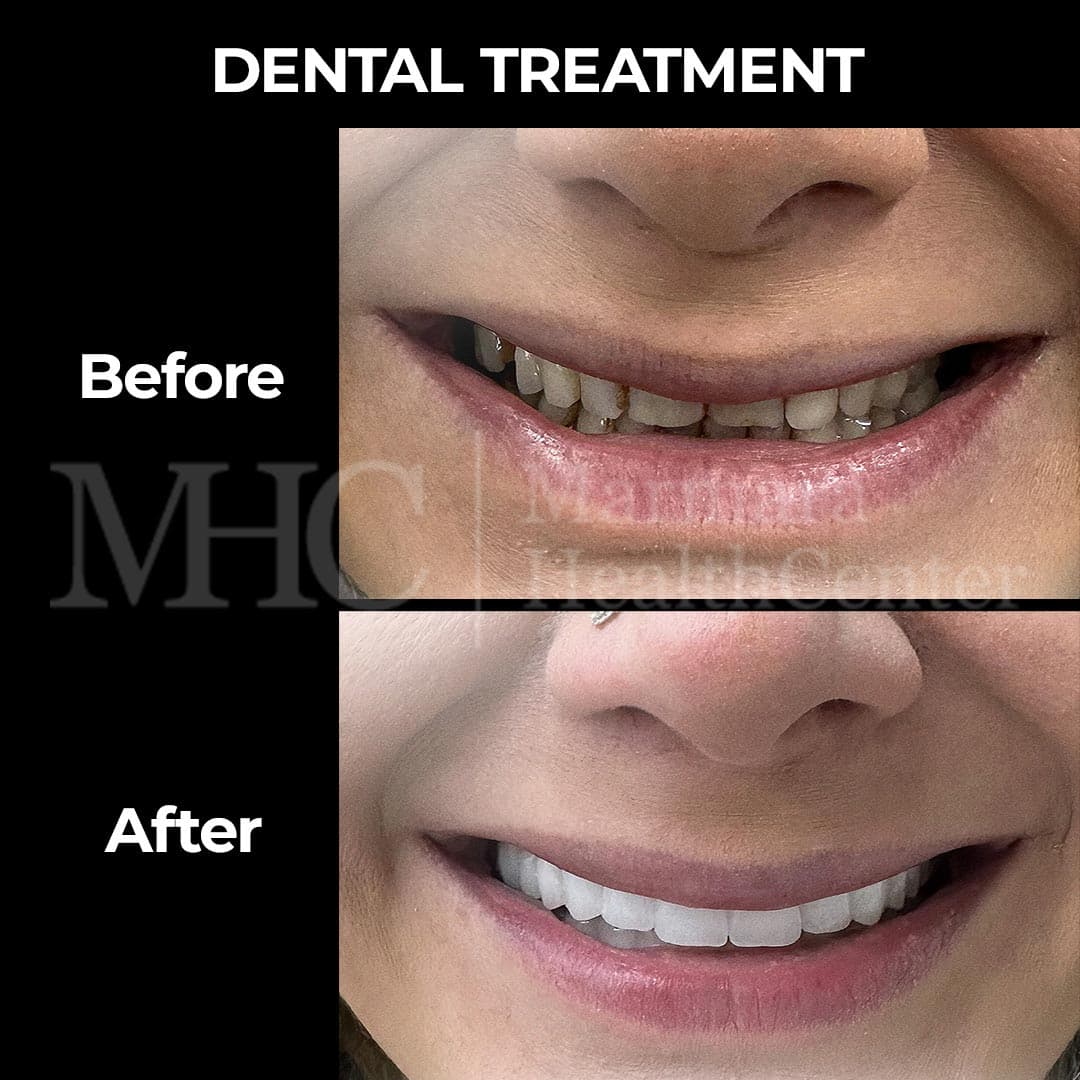
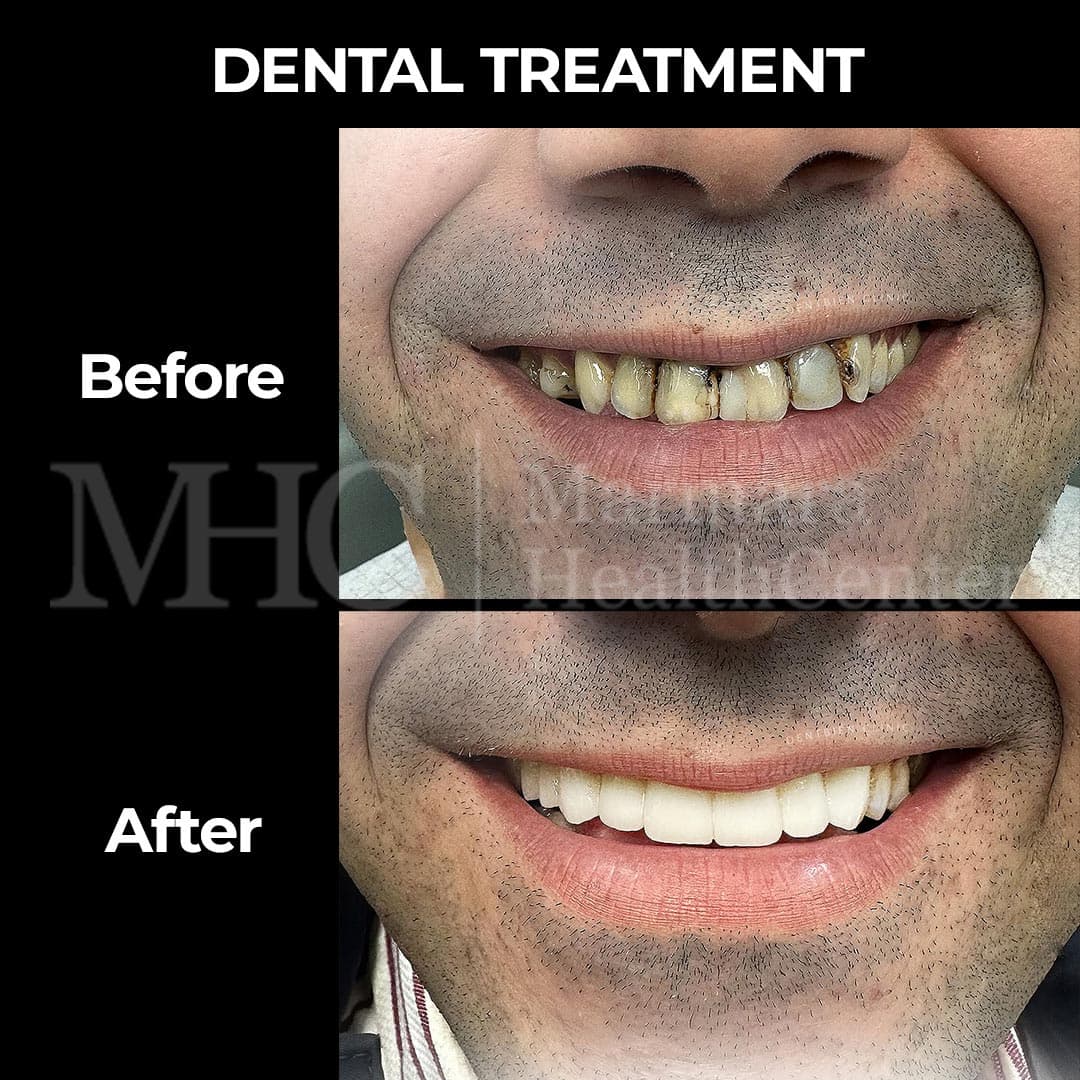
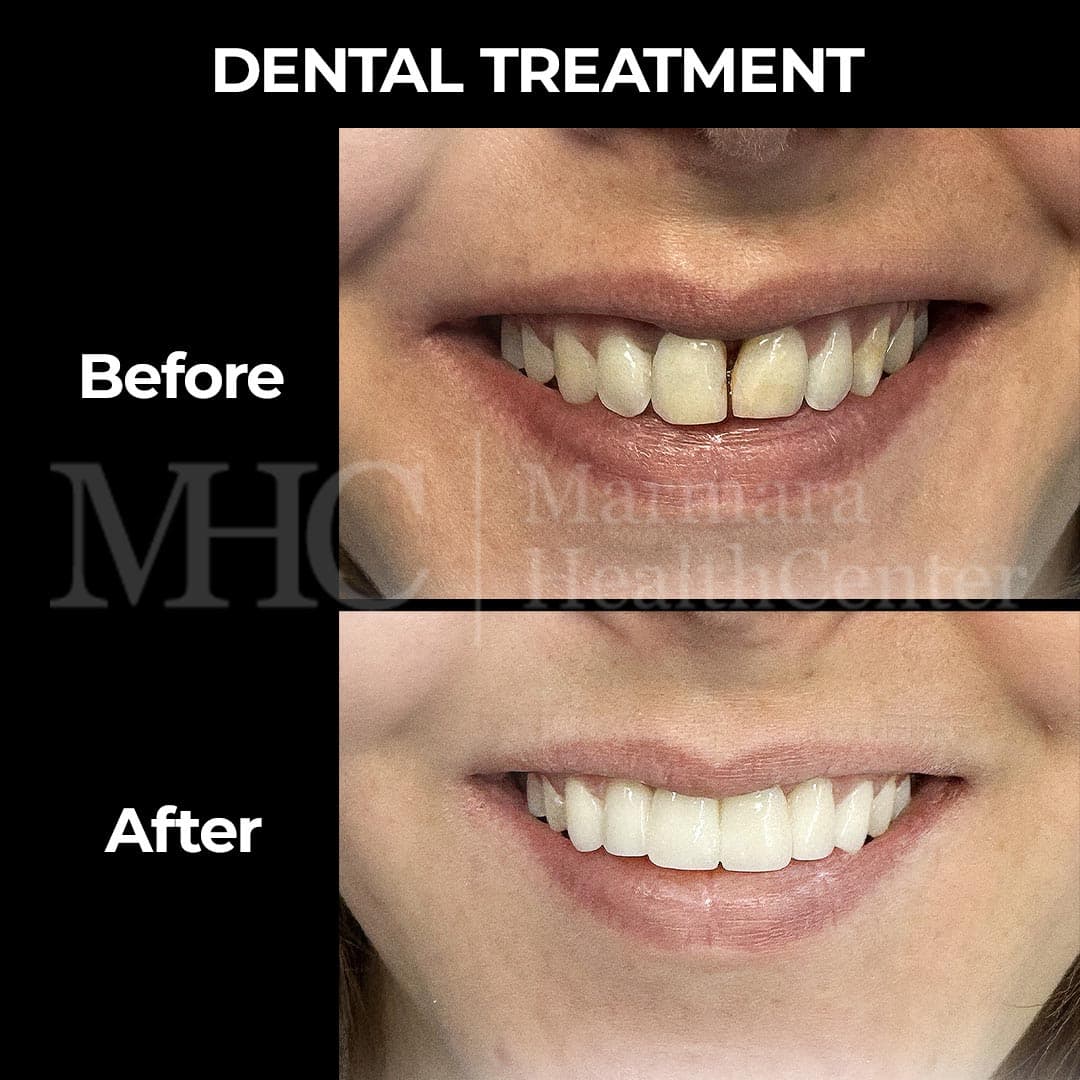
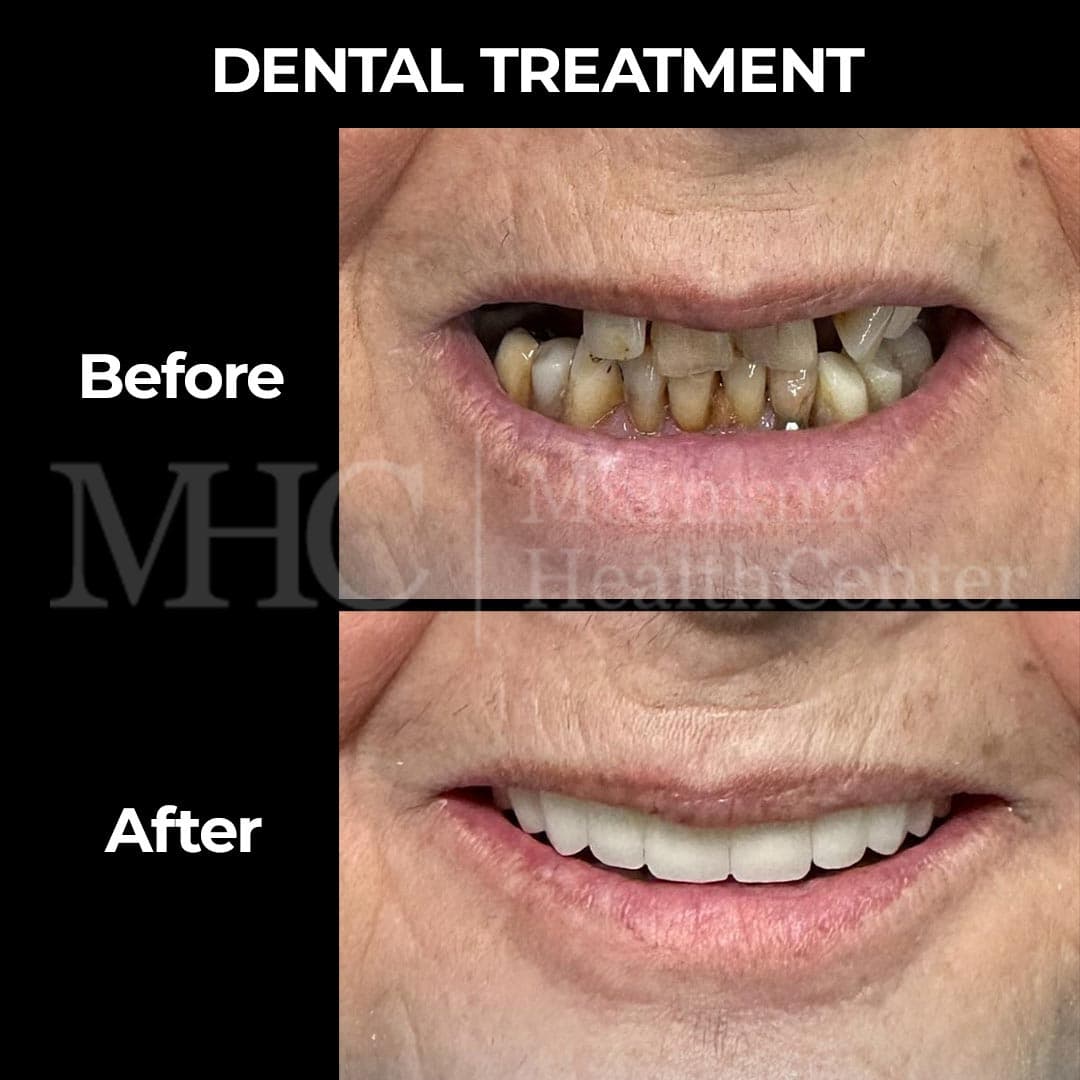
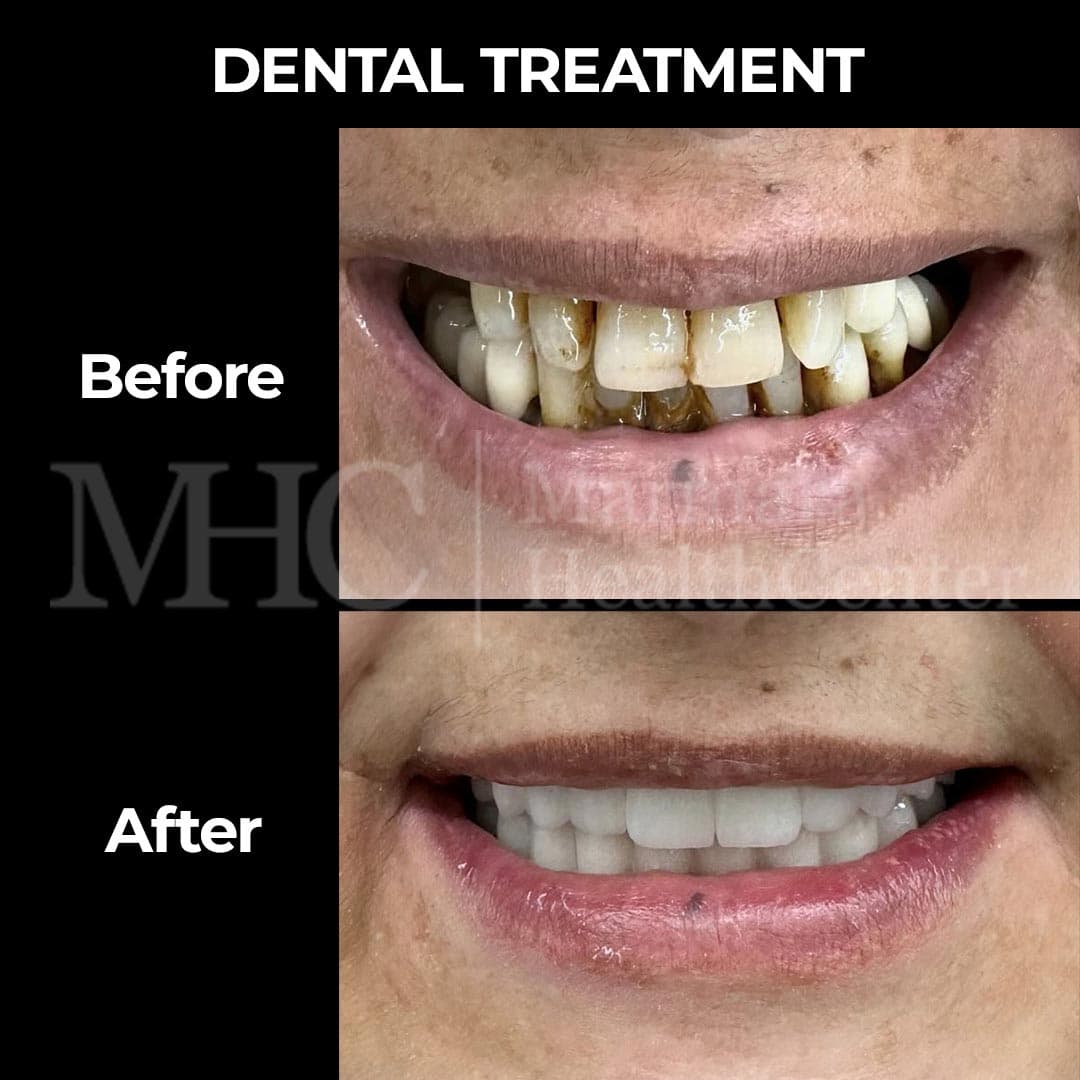
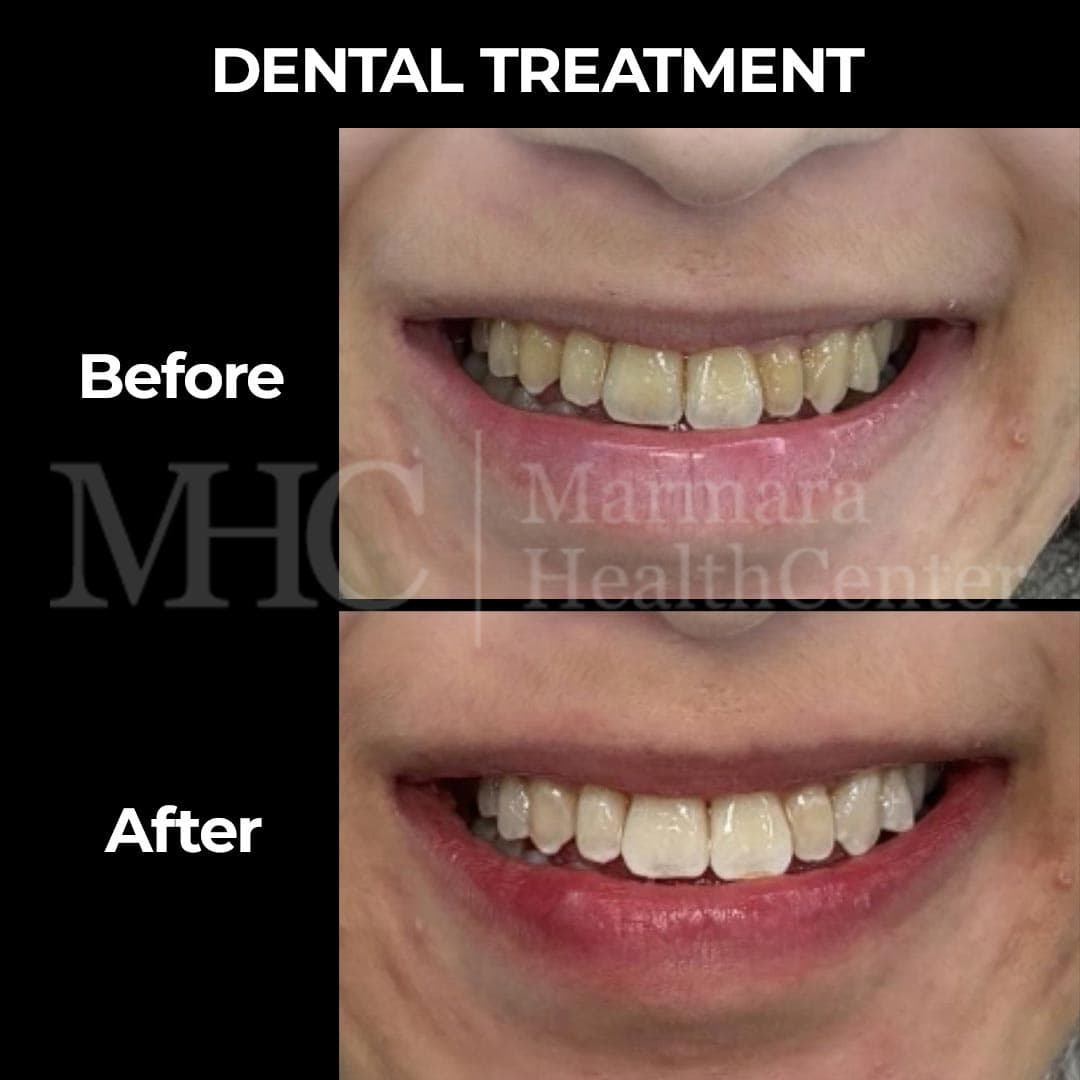
Mild tenderness, especially when biting; eases with simple pain relief
Chew on the other side until a crown is placed
A crown is fitted to protect and strengthen the treated tooth
With good hygiene a treated tooth can last for years
A root-canal-treated tooth can become brittle, so a crown is usually recommended to protect it; with a crown and good hygiene it can last many years.
Root canal treatment is a safe, common way to save a tooth, but possible issues include temporary soreness, and — less commonly — persistent infection needing re-treatment, or a brittle tooth that fractures if not crowned. Very curved or complex canals can be challenging. Modern techniques make treatment comfortable, and a protective crown greatly improves the long-term outcome.
Ministry-authorised health tourism — operating under the Republic of Türkiye Ministry of Health Health Tourism Authorization Certificate and a member of Health Türkiye.
Experienced multidisciplinary team — strong academic background and a high volume of successful procedures.
Accredited partner hospital — treatment in a fully equipped, modern clinical setting.
All-inclusive care — free online consultation, VIP airport transfers, accommodation, interpreter support and follow-up.
For detailed information about our aesthetic, hair, dental and bariatric treatments, please use the contact channels below. Initial consultations for international patients can be arranged remotely via video call or WhatsApp.