Loading...
Loading...
Tooth extraction is the removal of a tooth that is too damaged, decayed or impacted to keep — including problematic wisdom teeth. Performed gently under local anaesthesia, it relieves pain and infection and protects the surrounding teeth, with options to replace the tooth afterwards.
Tooth extraction is the removal of a tooth that is too damaged, decayed or impacted to keep — including problematic wisdom teeth. Performed gently under local anaesthesia, it relieves pain and infection and protects the surrounding teeth, with options to replace the tooth afterwards.
The most common questions about this treatment
The area is fully numbed with local anaesthesia, so you should feel pressure but not pain during the removal. Sedation is available for anxious patients or surgical cases. Mild soreness for a few days afterwards is normal and managed with simple pain relief.
Dry socket is when the protective blood clot in the socket is lost, exposing bone and causing pain. Avoid vigorous rinsing, smoking and drinking through straws for the first days, and follow your aftercare to prevent it.
Often, yes — replacing a missing tooth (with an implant or bridge) helps keep neighbouring teeth from shifting and preserves chewing and appearance. Your dentist will advise the best option and timing for your case.
The gum usually heals over the socket within 1–2 weeks, while the bone underneath continues to fill in over a few months. Following aftercare helps the early healing go smoothly.
A straightforward extraction needs only about 1–3 days. If you are also planning a replacement such as an implant, allow time for that treatment and its healing.
Explore other bariatric surgery options
A tooth extraction may be simple (loosening and removing a visible tooth) or surgical (for an impacted, broken or wisdom tooth, often via a small incision). It is recommended when a tooth cannot be saved by other means or is causing crowding or infection. Your dentist will discuss replacing the tooth with an implant or bridge where needed.
A tooth extraction is performed under local anaesthesia:
Assessment — an examination and X-ray confirm the need and plan a simple or surgical approach.
Numbing — the area is fully numbed with local anaesthetic (sedation is available if needed).
Removal — the tooth is gently loosened and removed; a surgical case may need a small incision.
Aftercare — the socket is cared for and you receive instructions to support healing.
You may be a suitable candidate if you:
Have a tooth too decayed or broken to save
Have an infection or abscess that cannot be treated otherwise
Have impacted or problematic wisdom teeth
Need a tooth removed for crowding or before orthodontics
Are in good general health (your dentist will review any conditions/medications)
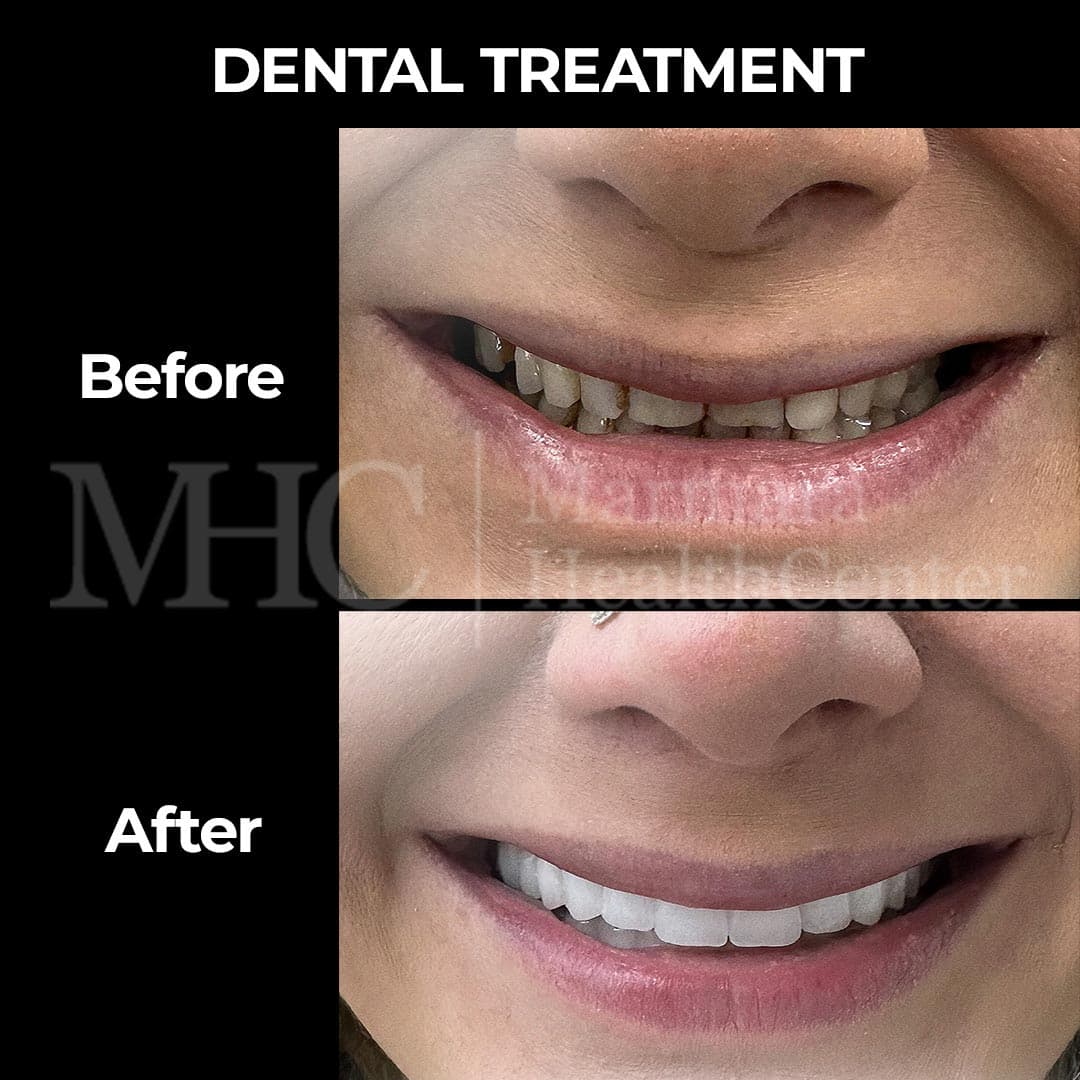
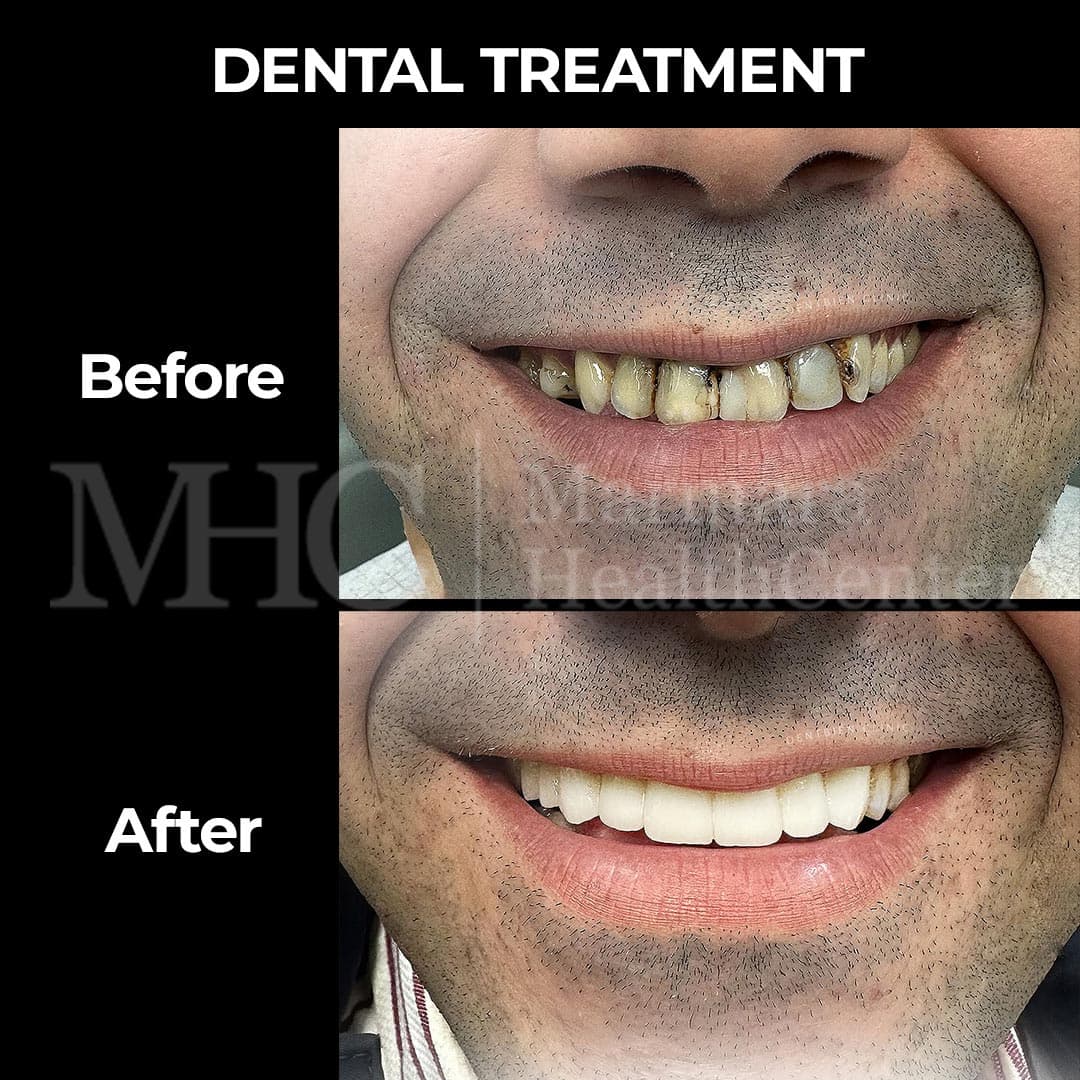
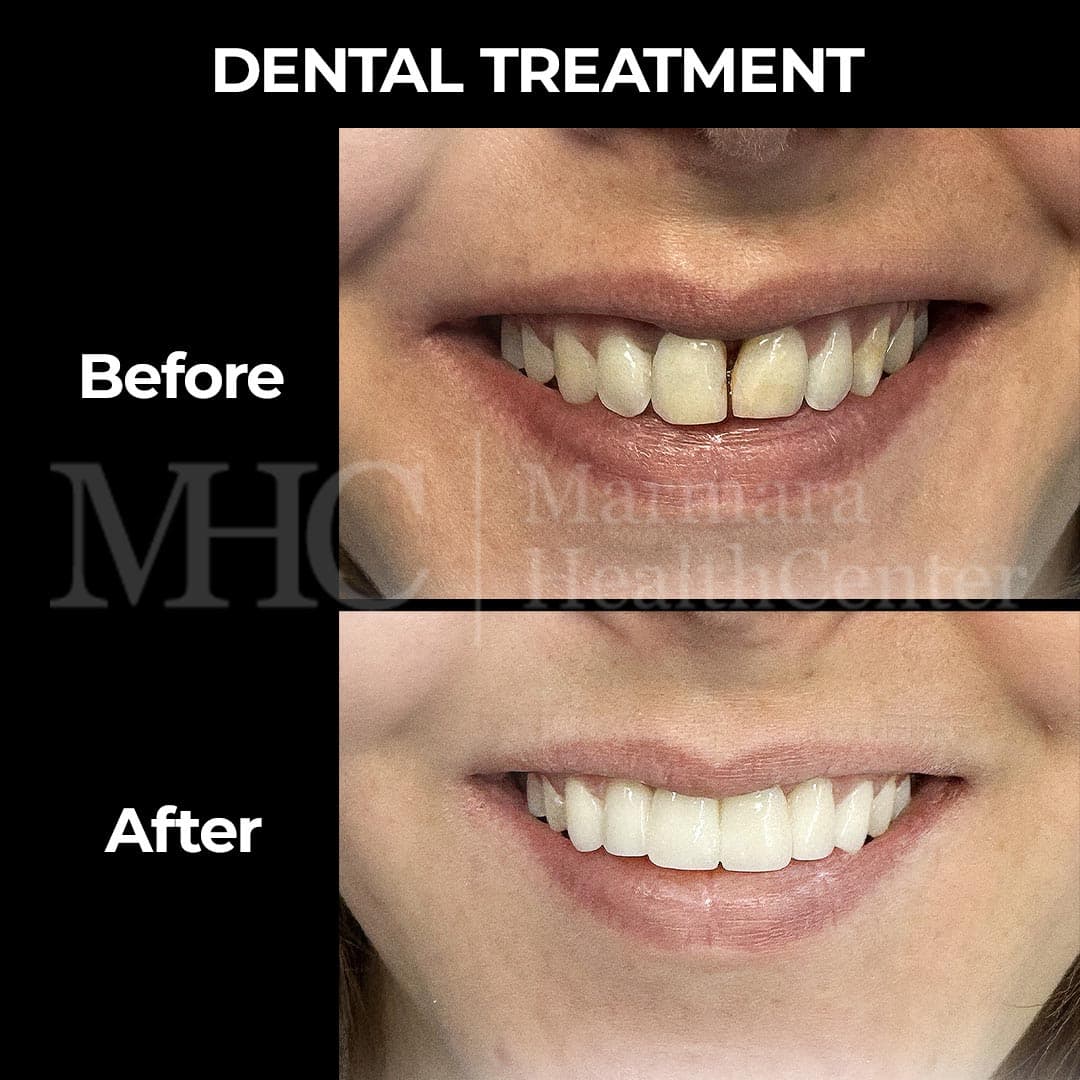
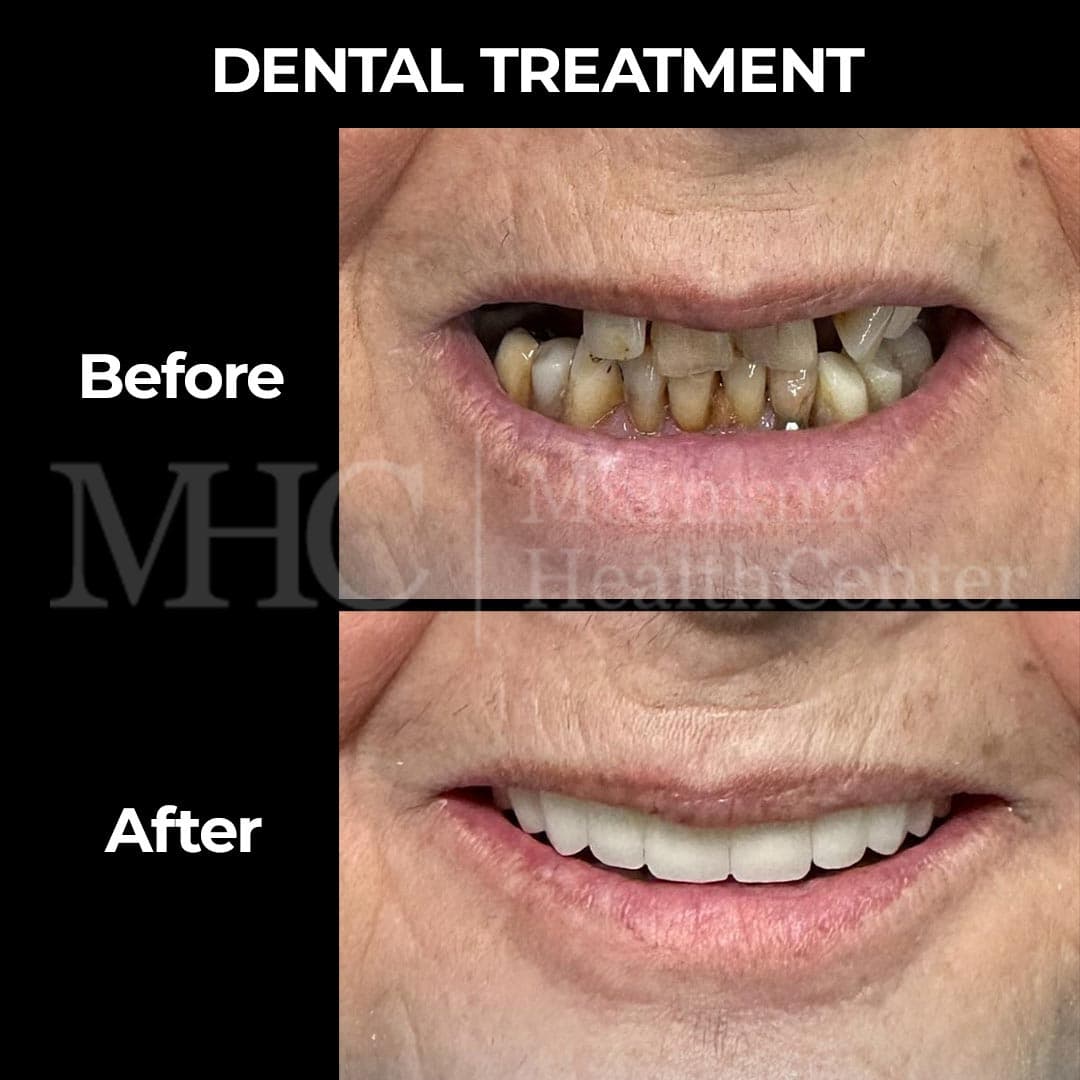
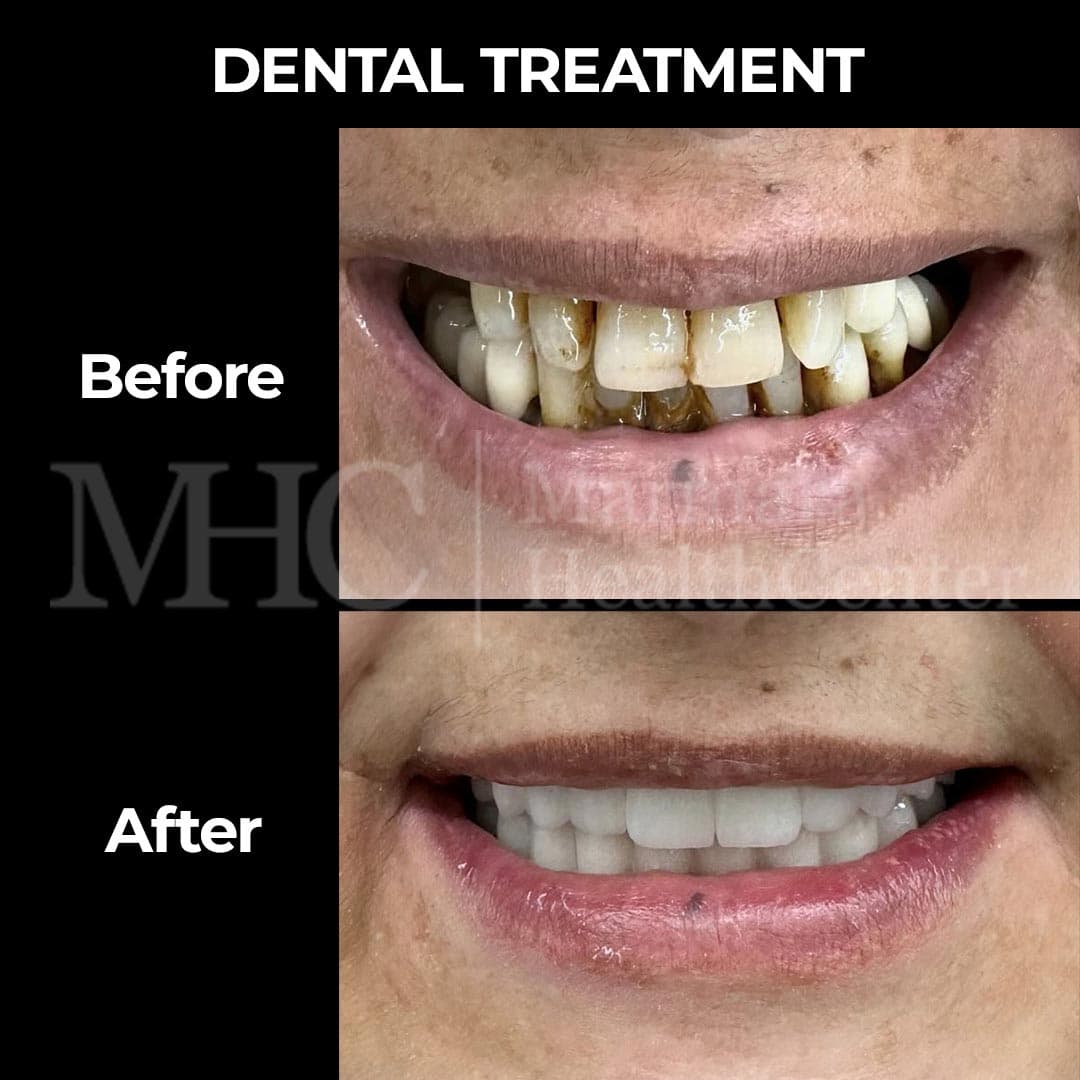
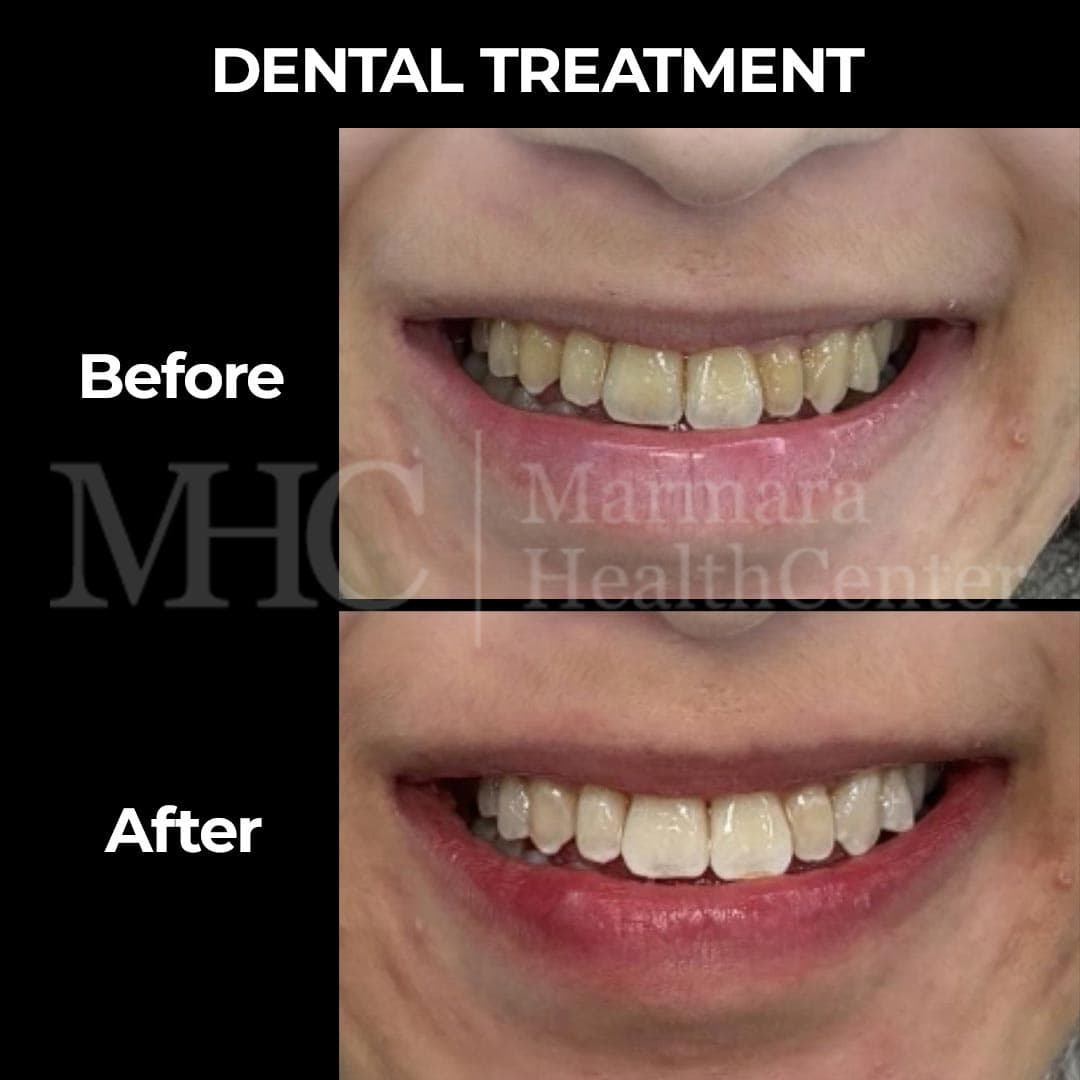
Real patient outcomes from Marmara Health Center
A blood clot forms; avoid rinsing hard, smoking or straws
Mild swelling and discomfort ease; soft foods
Gum heals over the socket; gentle hygiene around the area
Socket continues to heal; discuss replacement if needed
Protecting the blood clot in the first days prevents 'dry socket'; follow the aftercare instructions closely for smooth healing.
Tooth extraction is a routine, safe procedure, but possible effects include swelling, bleeding and discomfort that settle within days. The main avoidable complication is 'dry socket' if the clot is dislodged. Less common risks include infection or, for lower wisdom teeth, temporary nerve tingling. Your dentist reviews your X-ray and medical history to keep the procedure safe and plans replacement of the tooth where appropriate.
Ministry-authorised health tourism — operating under the Republic of Türkiye Ministry of Health Health Tourism Authorization Certificate and a member of Health Türkiye.
Experienced multidisciplinary team — strong academic background and a high volume of successful procedures.
Accredited partner hospital — treatment in a fully equipped, modern clinical setting.
All-inclusive care — free online consultation, VIP airport transfers, accommodation, interpreter support and follow-up.
For detailed information about our aesthetic, hair, dental and bariatric treatments, please use the contact channels below. Initial consultations for international patients can be arranged remotely via video call or WhatsApp.