Loading...
Loading...
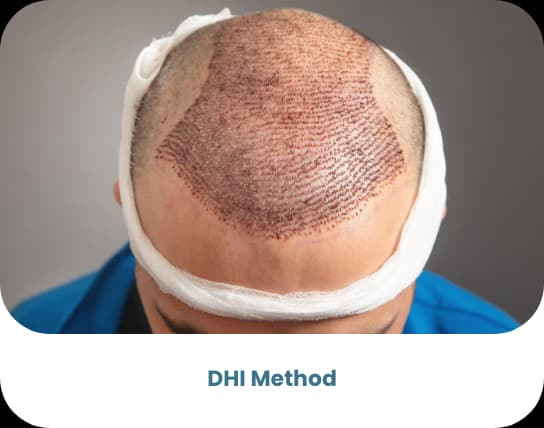
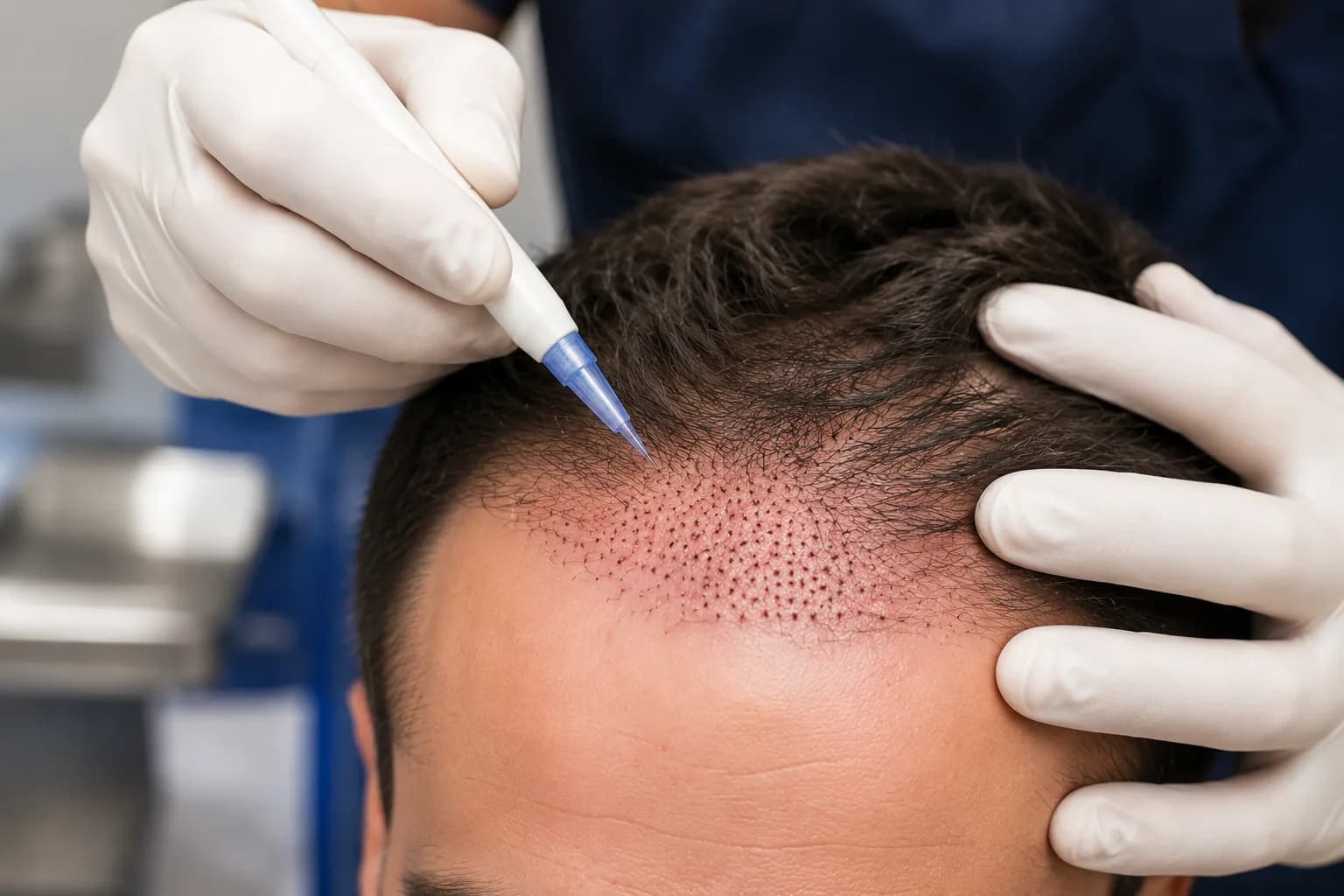
DHI (Direct Hair Implantation) is an advanced hair transplant method that implants each follicle directly into the scalp using a specialised Choi pen — without first cutting separate channels. This gives the surgeon precise control over the angle, depth and direction of every graft, producing dense, natural-looking results with minimal handling of the follicles.
DHI (Direct Hair Implantation) is an advanced hair transplant method that implants each follicle directly into the scalp using a specialised Choi pen — without first cutting separate channels. This gives the surgeon precise control over the angle, depth and direction of every graft, producing dense, natural-looking results with minimal handling of the follicles.
The most common questions about this treatment
The procedure is performed under local anaesthesia, so you stay awake but feel no pain during the transplant. Most discomfort is limited to the initial numbing injections. Afterwards, mild tenderness and tightness are well managed with simple pain relief and usually settle within a few days.
Both extract follicles individually with no linear scar. With DHI, the Choi pen opens the site and implants the graft in one step, allowing higher density and precise direction control. With FUE, channels are created first and grafts placed afterwards. Your surgeon advises which suits your case.
Transplanted hairs usually shed within the first 2–8 weeks ("shock loss"), which is normal. New growth begins around month 3–4, becomes noticeably thicker by months 6–9, and reaches the full, final result at about 12 months as follicles mature.
No. DHI uses individual follicle extraction, so there is no linear scar like older strip methods. The tiny extraction points in the donor area heal as small dots that are hidden once the surrounding hair grows, even at short lengths.
Most patients stay 2–3 days. This covers the consultation and donor assessment, the transplant session, and a first wash with aftercare guidance before flying home. Your coordinator arranges transfers, accommodation and interpreter support.
Transplanted follicles are taken from areas resistant to the hormone that causes pattern loss, so they typically keep growing for life. Existing non-transplanted hair can still thin over time, so your surgeon may discuss long-term maintenance during your consultation.
Explore other bariatric surgery options
DHI is a refinement of follicular unit extraction (FUE). Individual follicular units are harvested from the donor area, loaded into a hollow Choi implanter pen, and placed directly into the recipient area in one motion. Because the channel and the graft go in together, follicles spend less time outside the body, which supports strong survival rates.
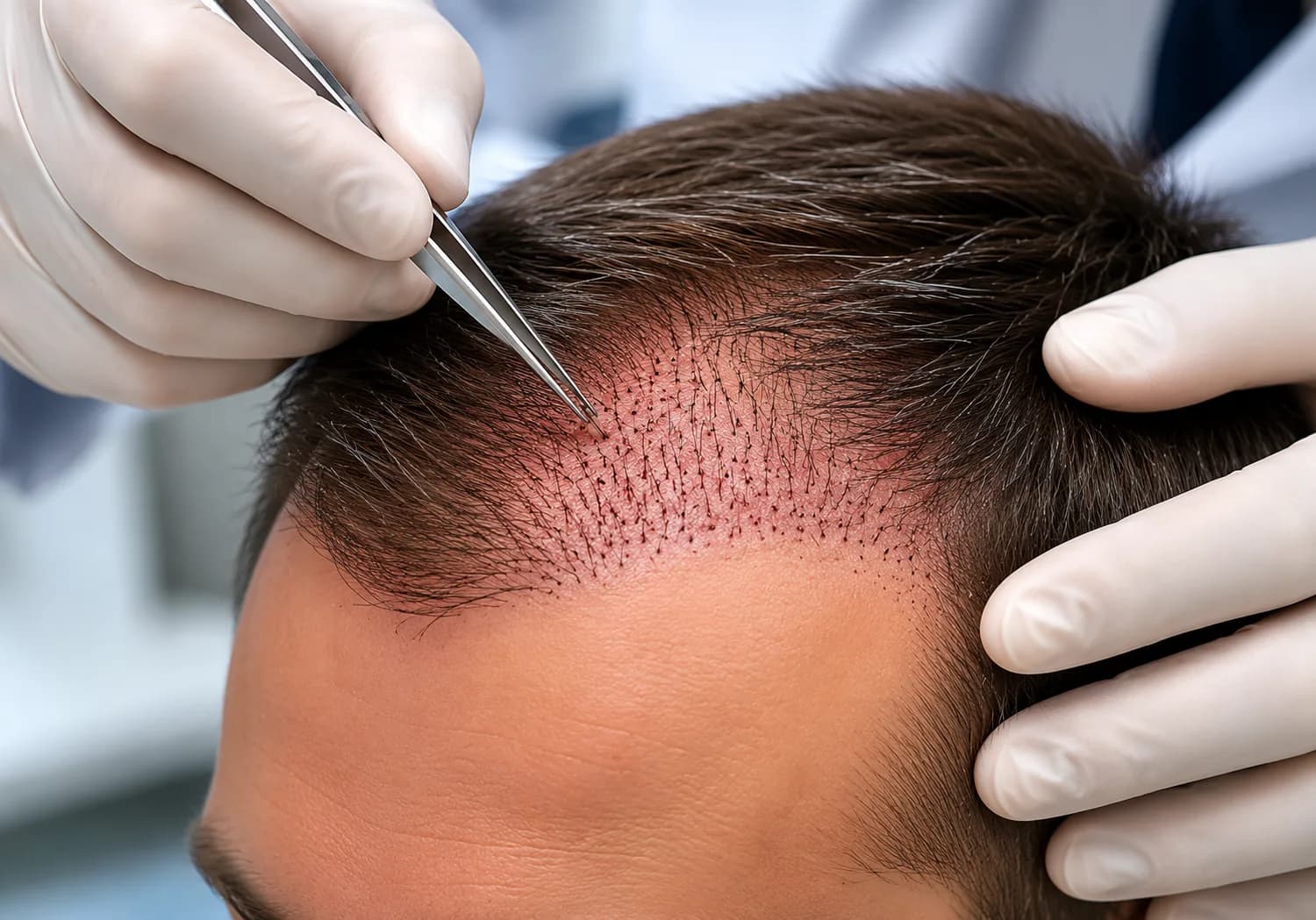
Both methods extract follicles one by one from the donor area, leaving no linear scar. The difference is in how grafts are placed.
DHI — the Choi pen creates the opening and implants the graft in a single step, so no channels are pre-cut. This allows tighter packing for higher density and excellent control in the hairline.
FUE (incl. Sapphire FUE) — recipient channels are opened first, then grafts are placed into them. Sessions can be faster, which suits larger areas.
Your surgeon recommends the method that best fits your goals, the area to be covered and your donor capacity.
You may be a suitable candidate for a DHI hair transplant if you:
Have pattern hair loss (androgenetic alopecia) that has stabilised
Have a healthy donor area with sufficient density at the back/sides of the scalp
Want high density or a refined, natural hairline
Are in good general health
Have realistic expectations about coverage and timeline
A consultation with donor-area assessment confirms how many grafts can be transplanted and what result is achievable.
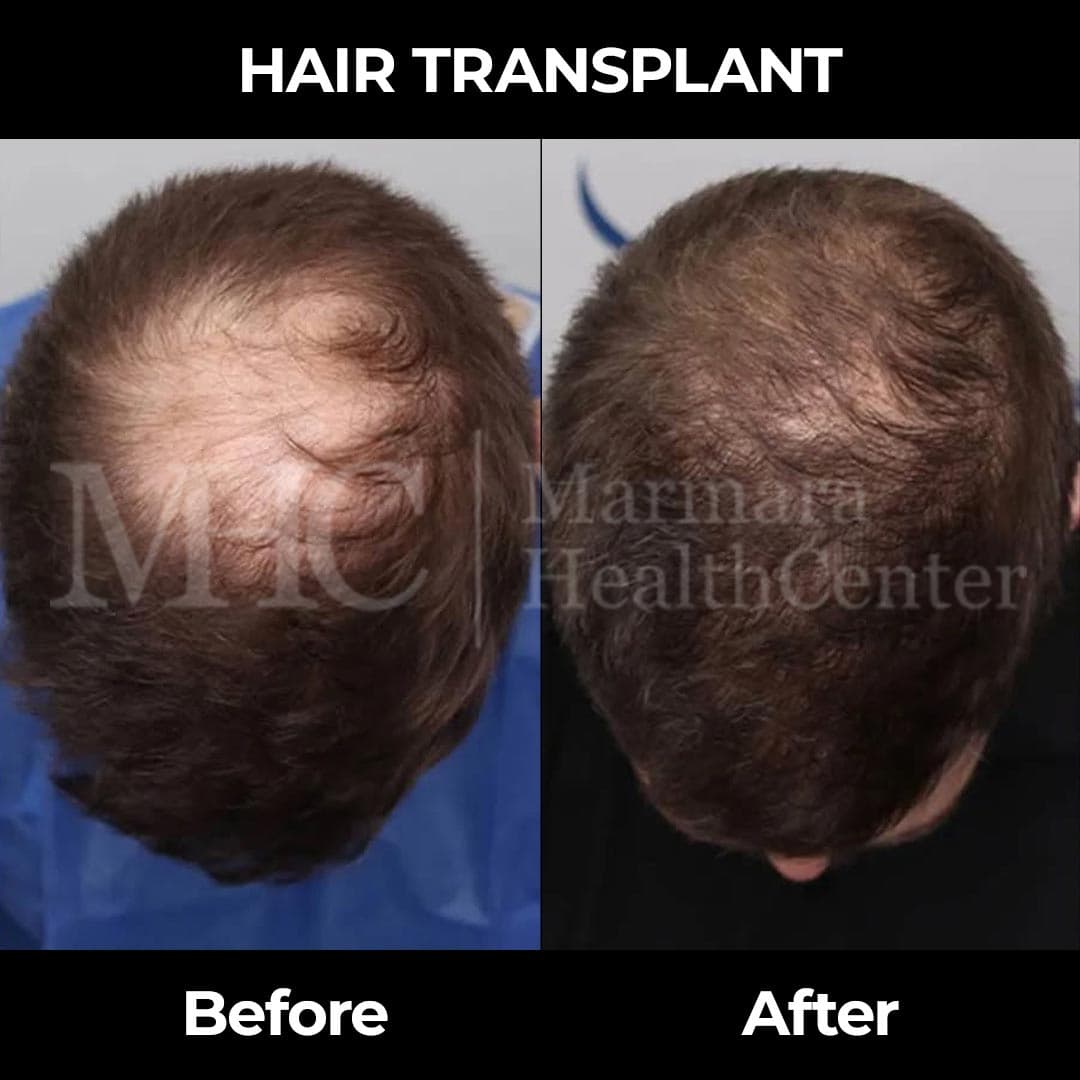
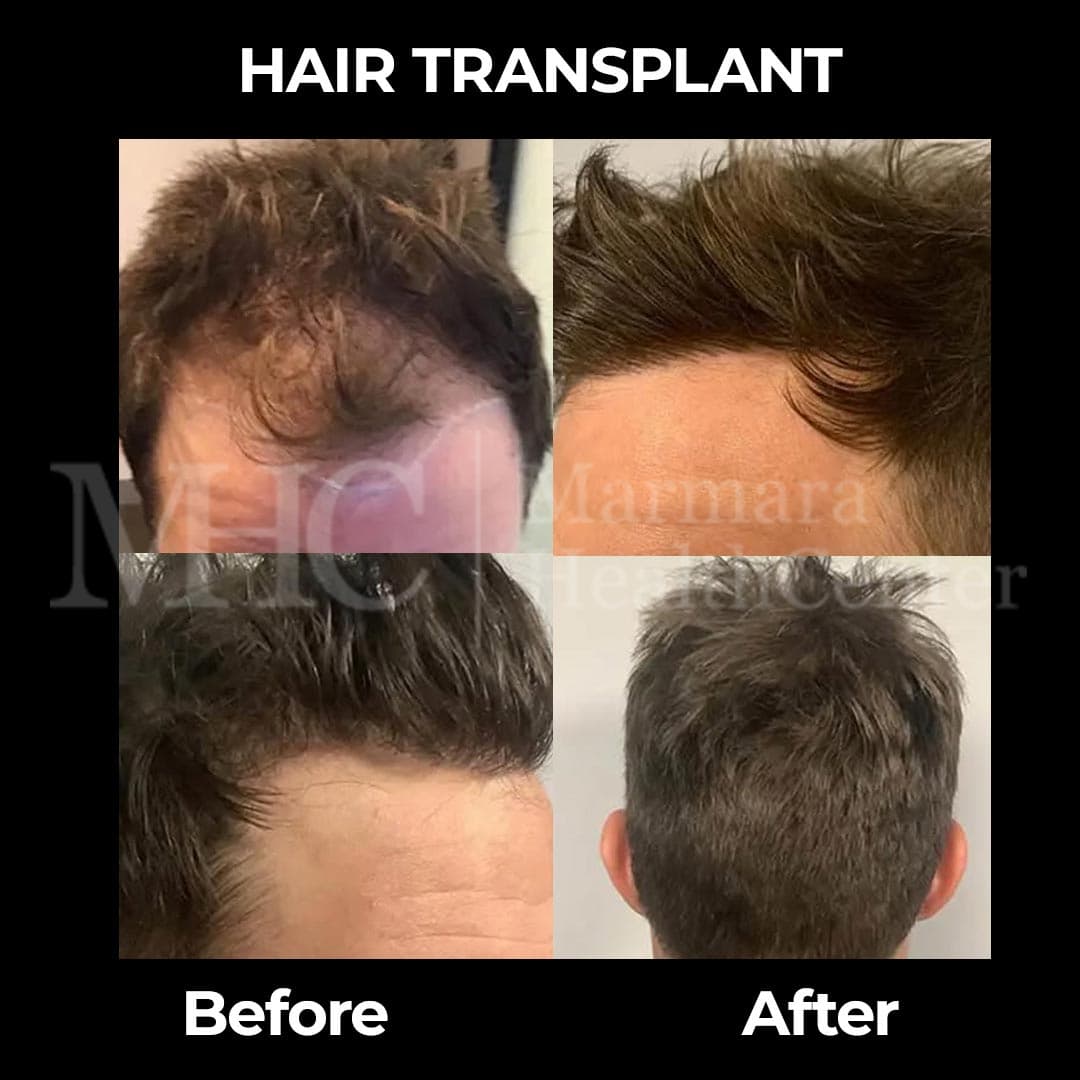
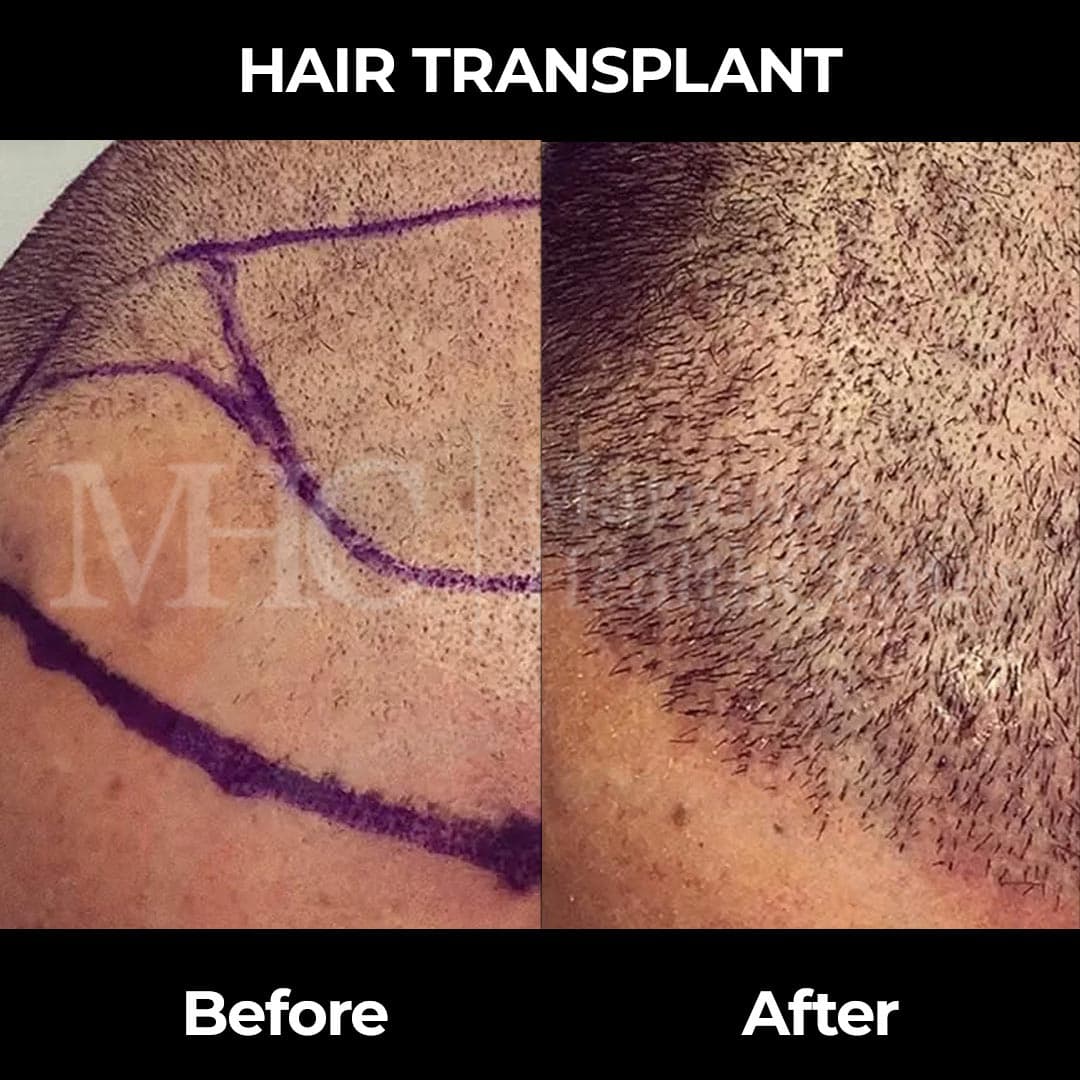
Real patient outcomes from Marmara Health Center
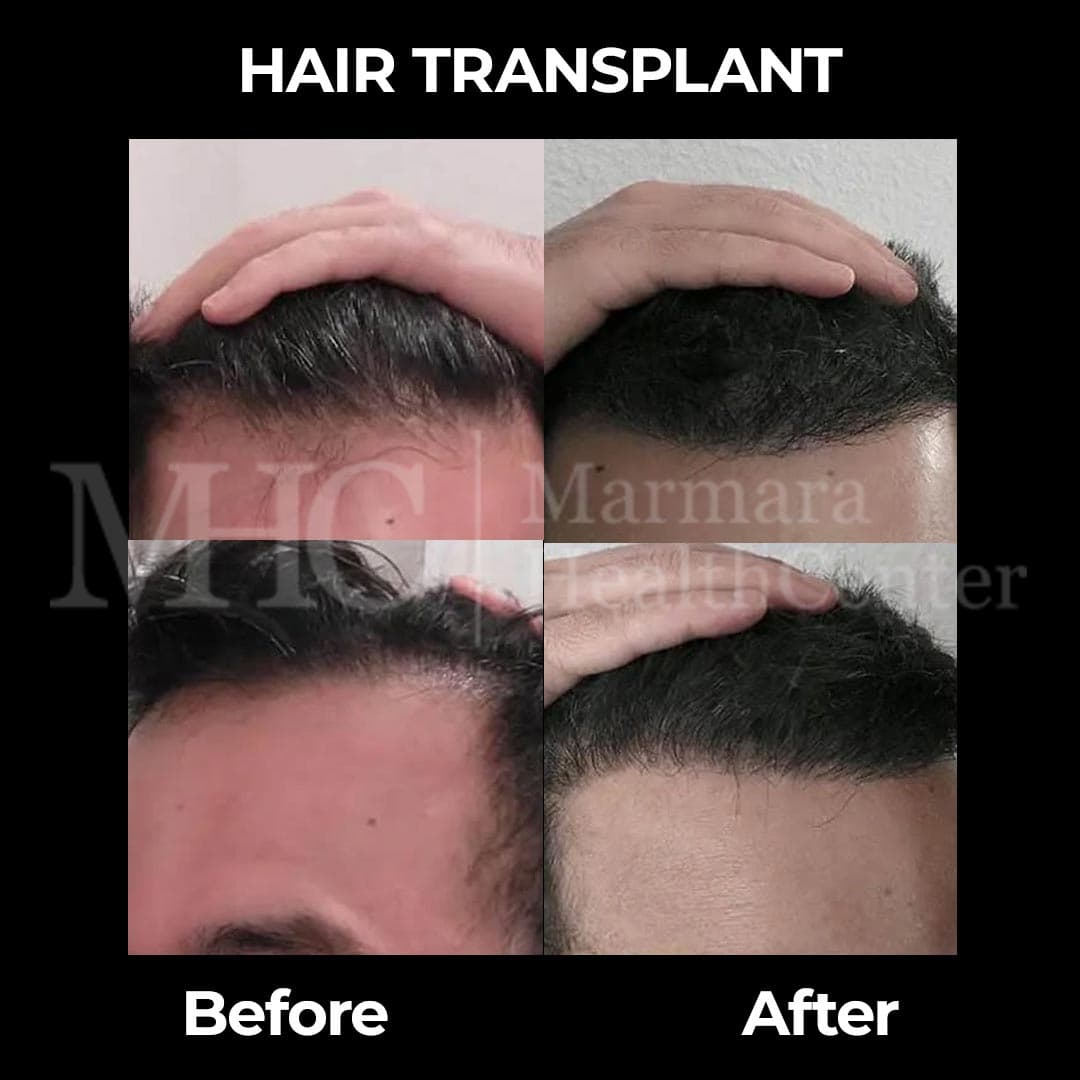
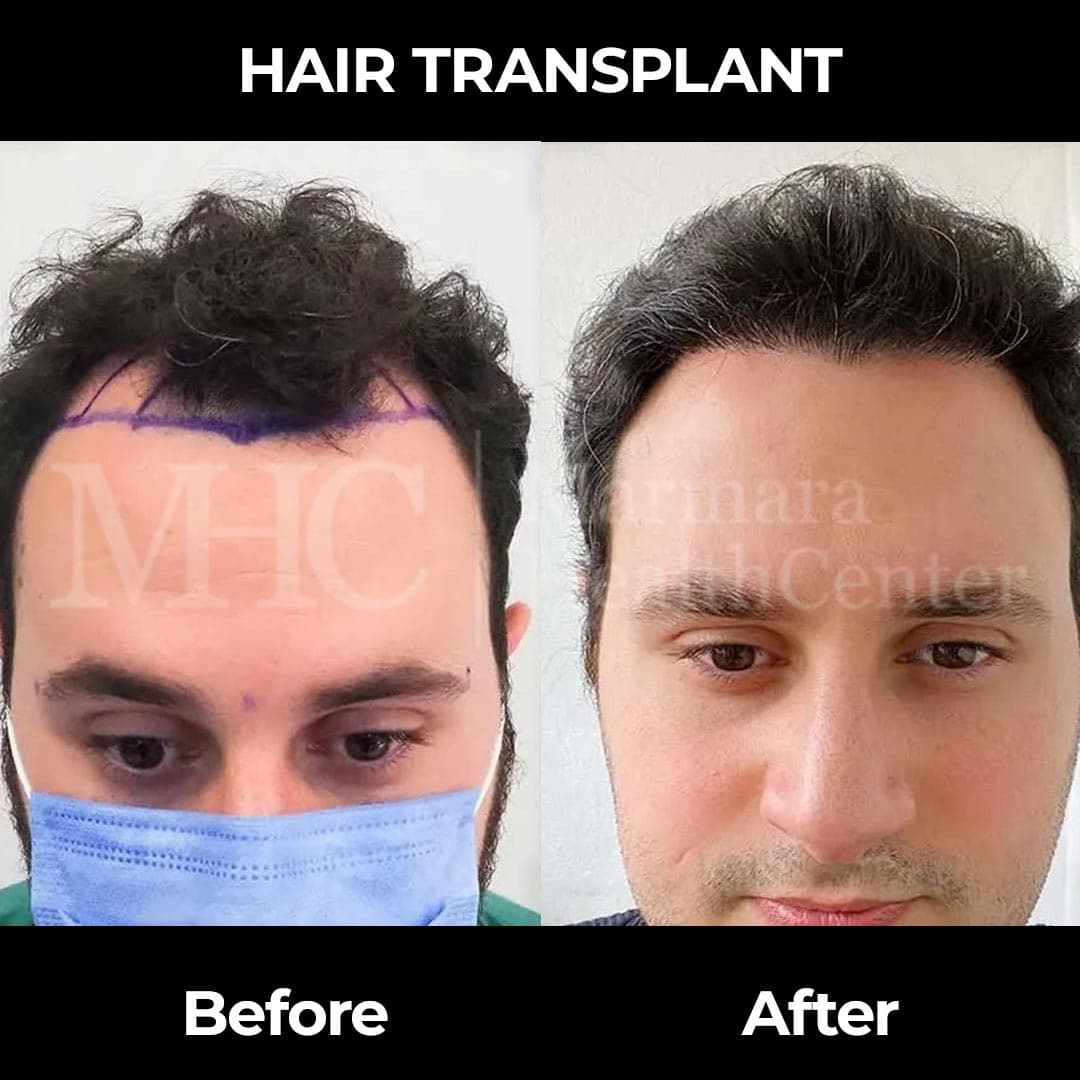
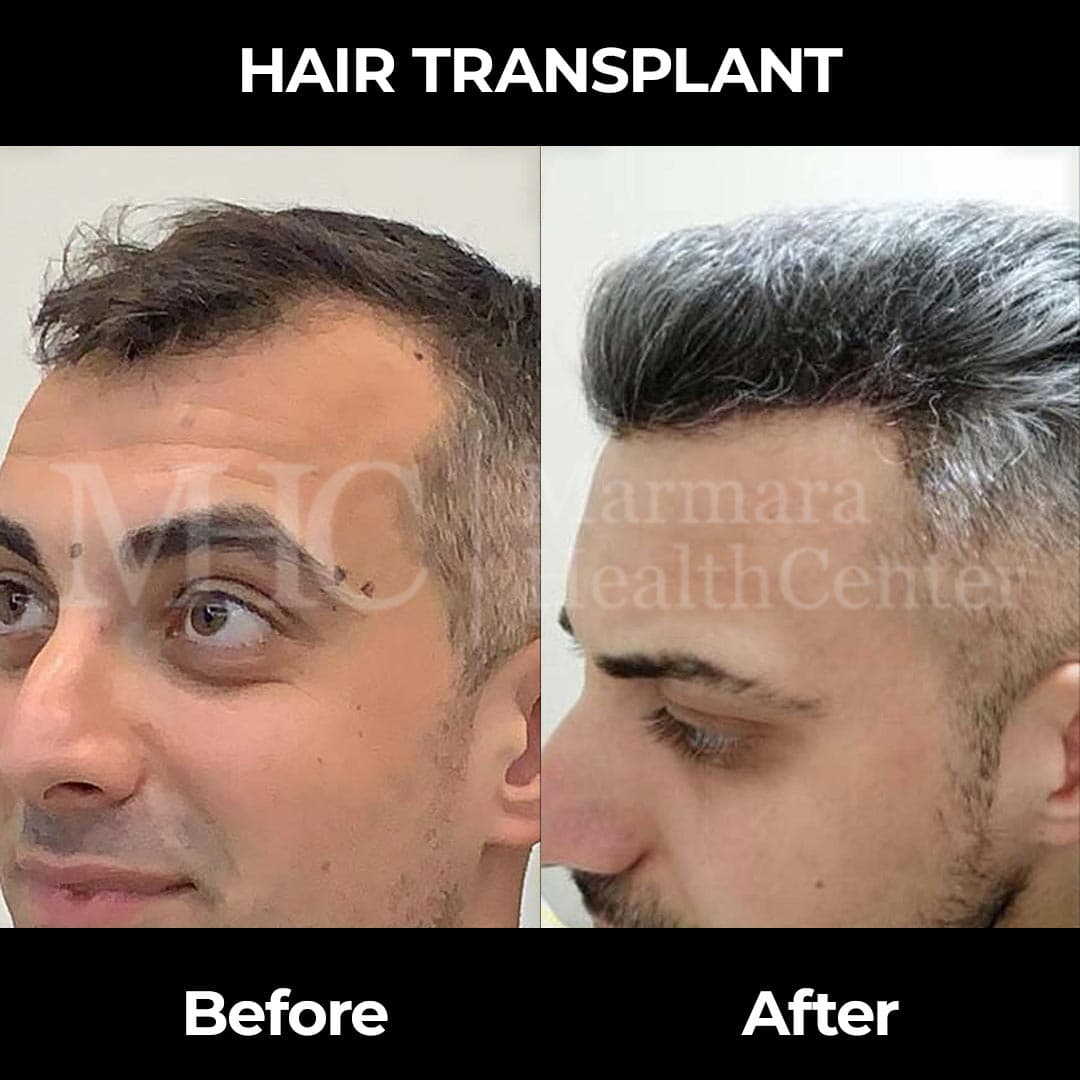
Mild redness and small scabs; most return to routine
Scabs clear; gentle washing as instructed
"Shock loss" — transplanted hairs shed (normal and temporary)
New hair starts to grow
Noticeable thickening and coverage
Full, final result
The first 10 days are the most important for protecting the grafts. Shedding before regrowth is expected — it is part of the normal hair cycle, not a failure of the transplant.
A DHI hair transplant is a minimally invasive procedure performed under local anaesthesia, and serious complications are uncommon. Possible effects include temporary swelling of the forehead, redness, small scabs, numbness and itching during healing, and temporary shock loss. Rare risks include infection or folliculitis, or uneven density if aftercare is not followed. Choosing an experienced team and following the washing and care instructions closely protects your result.
Ministry-authorised health tourism — an Istanbul clinic operating under the Republic of Türkiye Ministry of Health Health Tourism Authorization Certificate and a member of the Health Türkiye programme.
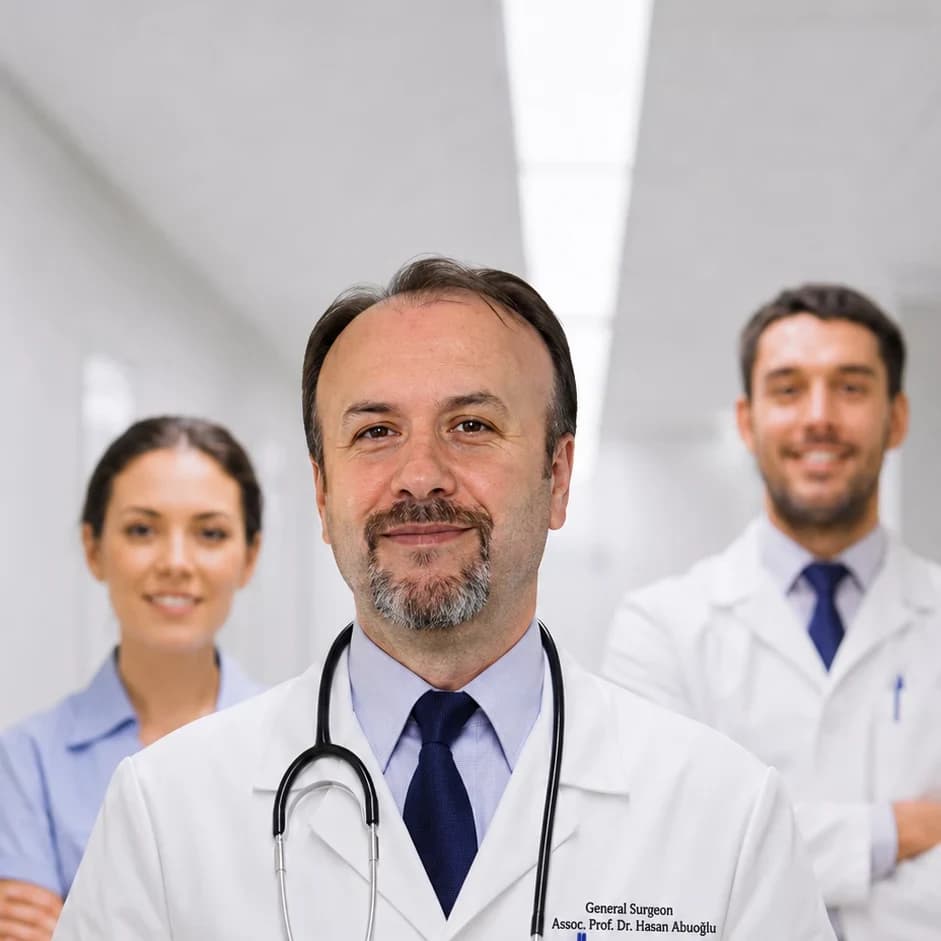
Experienced hair restoration team — meticulous graft handling for natural hairline design.
Accredited partner facility — treatment in a fully equipped, hygienic clinical setting.
All-inclusive care — free online consultation and graft assessment, VIP airport transfers, hotel accommodation, interpreter support and post-procedure follow-up.
For detailed information about our aesthetic, hair, dental and bariatric treatments, please use the contact channels below. Initial consultations for international patients can be arranged remotely via video call or WhatsApp.